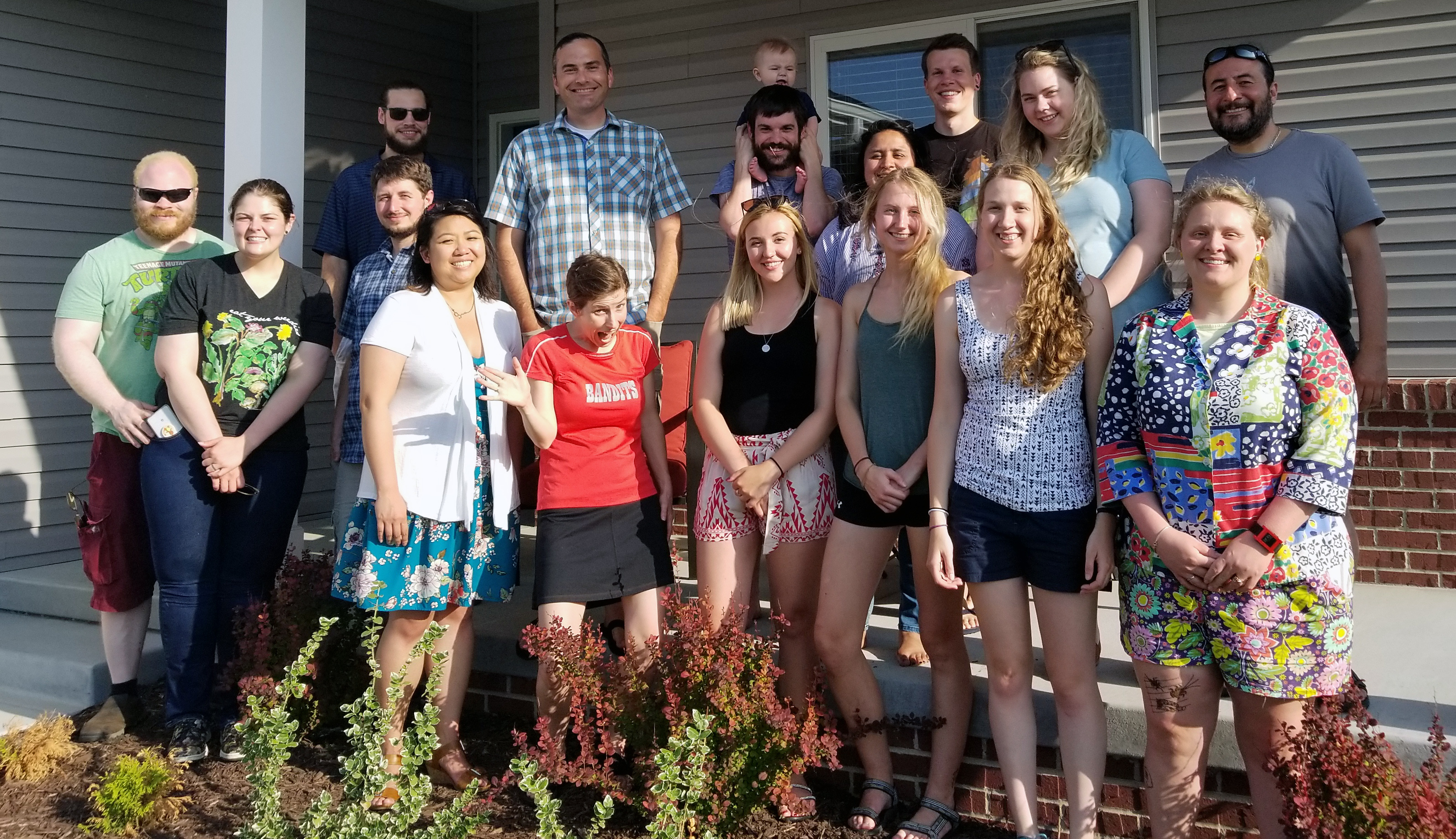
 Joining the team are two new SNR doctoral students, Amie Sommers and Kim Carroll-Steward, undergraduate research assistant Brooke Mott, and incoming postdoctoral researcher Ranu Roy, who recently completed her Ph.D. at Indiana University. They join a fantastic continuing group of team members, including SNR doctoral student Diane Lally, postdoc Devarati Bhattacharya, and undergraduate research assistants Holly White, Isabella Catalano, and Nancy Theodor.

 ]]>
Dauer, J. & Forbes, C. T. (2016). Making decisions about complex socioscientific issues: A multidisciplinary science course. Science Education & Civic Engagement: An International Journal, 8(2), 5-12.
]]>The funding will support the development of a new “Water in Society” undergraduate course. Water in Society will be an interdisciplinary course, drawing from the fields of science, technology, engineering, and mathematics (STEM) education, hydrological sciences and social and decision sciences.
[…}
“Our hope is that all UNL students, whether they’re studying to be a scientist, teacher or lawyer will have the background to make educated decisions when it comes to their food, and the Water in Society course can support that goal,” said Forbes.
]]>
 implementation, and study of a new, interdisciplinary course for non-majors – SCIL/AECN/NRES 109: Water in Society – at the University of Nebraska-Lincoln (UNL). The Fostering Undergraduate Students’ Disciplinary Learning and Water Literacy (WELL) project presents an outstanding opportunity to iteratively develop and study an innovative undergraduate STEM learning experience through design- and discipline-based education research. We are lucky to have an amazing, interdisciplinary team on board for this project, including faculty associated with UNL’s Water for Food Global Institute and two graduate students. The new course will be an integral part of a newly-established undergraduate minor – Food, Energy, & Water in Society – in CASNR, as well as a key component of a growing suite of undergraduate experiences associated with the IANR Science Literacy Initiative.
]]>
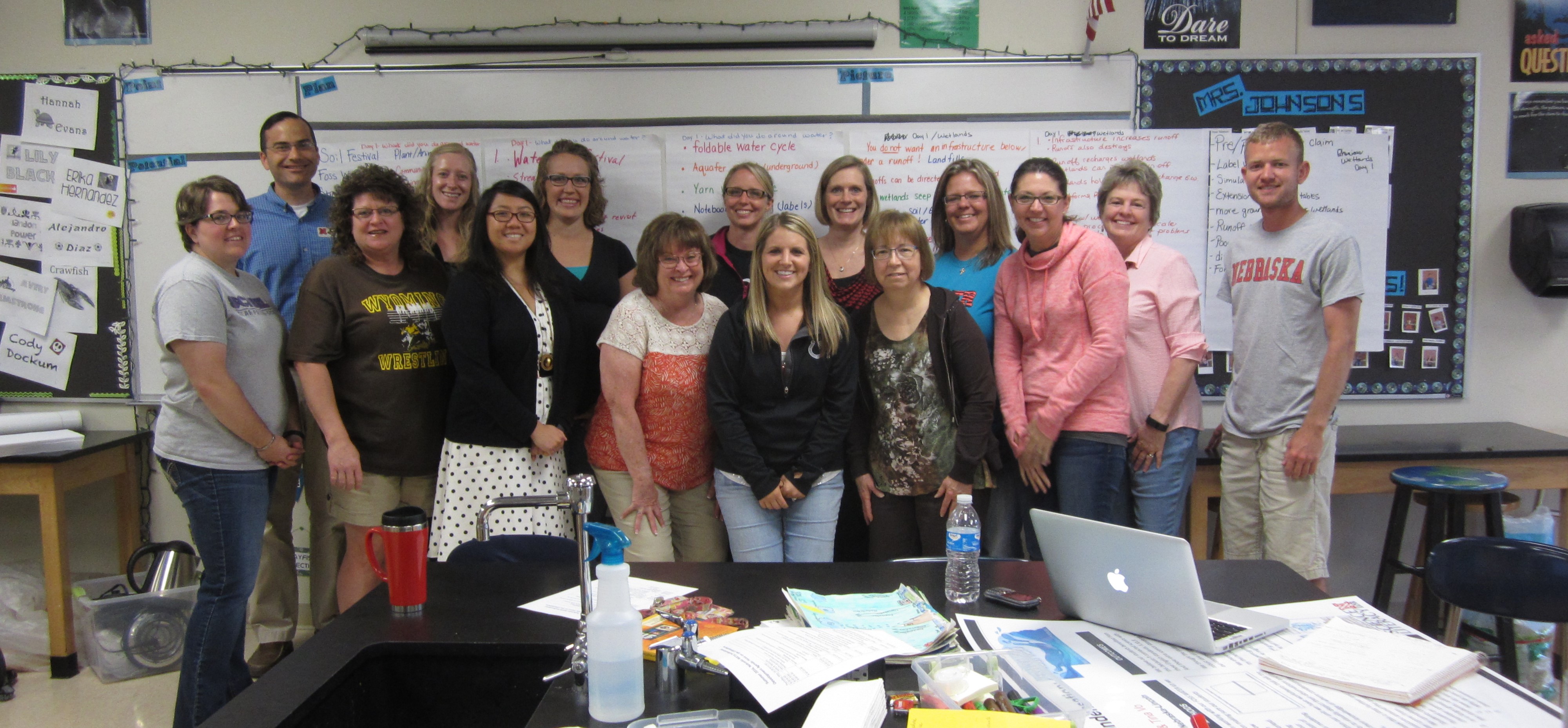 ]]>
 Over the past year, our team has had the opportunity to work with teachers from Beatrice Middle School and Lourdes Central Catholic School in Nebraska City on a new pilot project using wind energy systems as a vehicle for teaching core, NGSS-based STEM concepts and decision-making about socio-scientific issues. The project involves development of a 2-week mini-unit grounded in ongoing, real-world discussions about the recently-proposed Hallam Wind farm in SE Nebraska. The mini-unit involves investigations of wind turbine design and power production, as well as analysis of stakeholder perspectives and policy issues. The curriculum was implemented in three 6th-grade classrooms this month, including those highlighted in this week’s story by the Beatrice Daily Sun. Research associated with this project, led up by SNR masters student McKinzie Peterson and conducted in collaboration with Prof. Dr. Jan Christoph Schubert from the Friedrich-Alexander-Universität Erlangen-Nürnberg, will investigate students’ problem-framing and science-informed decision-making about wind energy production in Nebraska. Thanks also to Chad Johnson at Nebraska Public Power District for collaborating on this project.
]]>
 I was honored to be invited to speak at this year’s symposium of the Global Food Security Consortium at Iowa State University. The annual event brings together innovators in agricultural education, research, and outreach, all engaged in the grand challenge of feeding 9.6 billion by 2050. In my talk, entitled Cultivating science literacy in the nexus: Multidisciplinary STEM education across food, energy, water, I shared an overarching framework and sampling of current activities associated with the IANR Science Literacy Initiative at UNL. This was an amazing opportunity not only to share exciting work that’s happening at UNL, but to learn about scientific research and community development work being conducted around the globe to address food security issues and contribute to cultivation of sustainable food systems.
]]>
 ]]>