 The NSF-funded CliMES project was featured last week on NET, Nebraska’s PBS & NPR Stations. The story provides an overview of the project, how it came about in Nebraska, and how the CliMES curriculum looks in the classrooms we’ve been working in. Many thanks to NET reporter Becca Costello for taking an interest in this project and pursuing a story that reflects perspectives of project teachers and the many stakeholders who have been involved. To learn more about the research-practitioner partnership that has made this project possible, involving UNL, NASA-GISS, and Lincoln Public Schools, please check out Chap. 3 of the recently released edited book, entitled Teaching Climate Change in the United States.
Forbes, C.T., Chandler, M., Blake, J., Bhattacharya, D., Carroll-Steward, K., Johnson, V., DeGrand, T., Mason, W., and Murrow, B. (2020). Fostering climate literacy with global climate models in secondary science classrooms: Insights from a collaborative partnership. In J. Henderson & A. Drewes (Eds.), Teaching Climate Change in the United States. Routledge; New York.
]]>
The CliMES team is excited to share our first project publication, which appears in the December issue of the Green Schools Catalyst Quarterly, a publication of the Green Schools National Network. In this article, we provide an overview of the CliMES project, as well as a primer on the findings from the literature review in which we are currently engaged focused on K-16 climate education. This issue, entitled Climate Literacy: Educating with the Future in Mind, focuses on climate education and includes contributions from an array of esteemed science education colleagues, including some of our CliMES project advisory board members. We very much appreciate the opportunity to contribute to this important issue and the broader conversation about climate education in K-12 classrooms.
Bhattacharya, D., Carroll-Steward, K., Sutter, A., Chandler, M., & Forbes, C.T. (2018). Climate literacy: Insights from research on K-16 climate education. Green Schools Catalyst Quarterly, V(4), 26-35.
]]>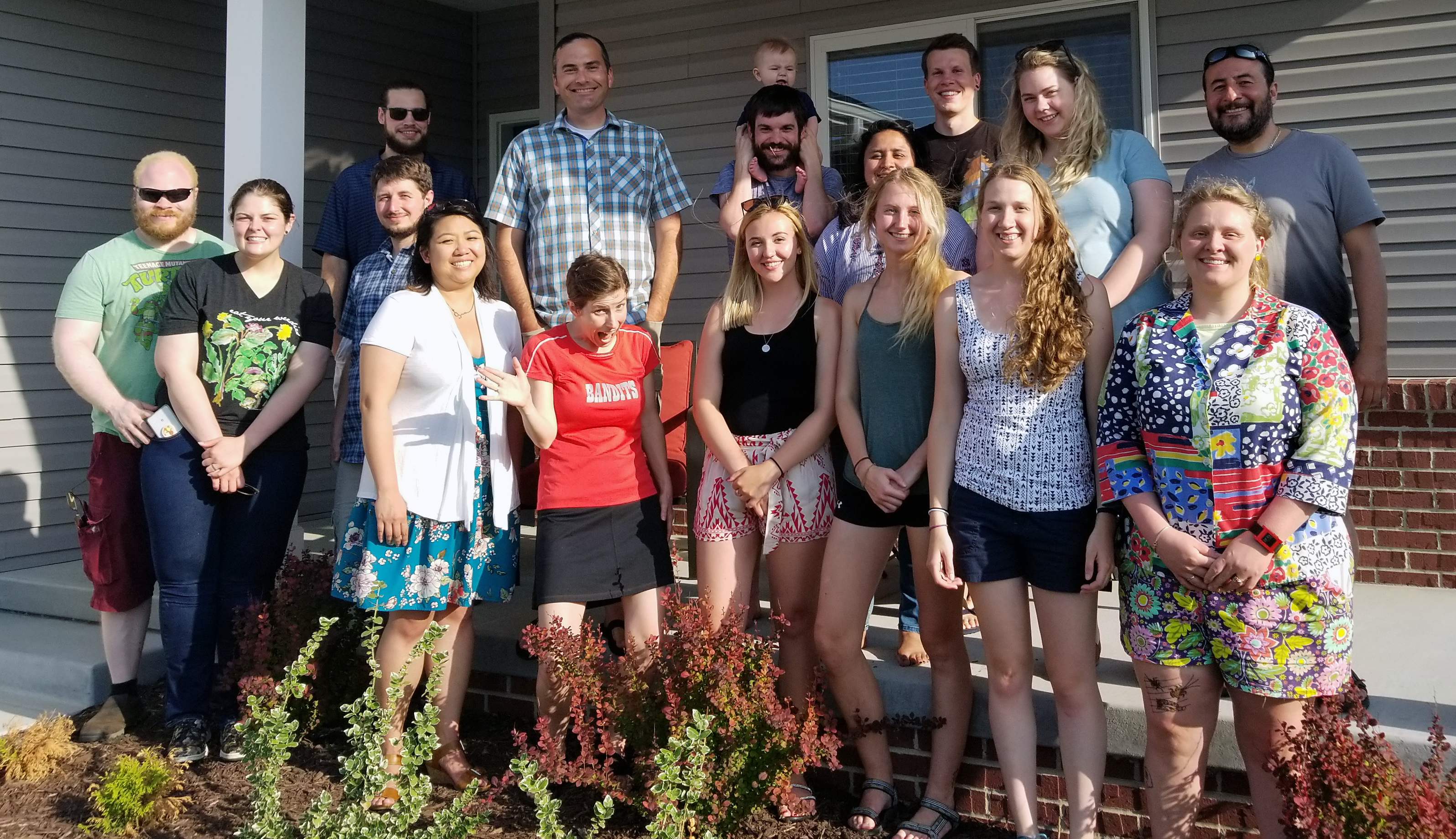 Joining the team are two new SNR doctoral students, Amie Sommers and Kim Carroll-Steward, undergraduate research assistant Brooke Mott, and incoming postdoctoral researcher Ranu Roy, who recently completed her Ph.D. at Indiana University. They join a fantastic continuing group of team members, including SNR doctoral student Diane Lally, postdoc Devarati Bhattacharya, and undergraduate research assistants Holly White, Isabella Catalano, and Nancy Theodor.
 ]]>
]]>Analyze geoscience data and the results from global climate models to make an evidence-based forecast of the current rate of global or regional climate change and associated future impacts to Earth systems.
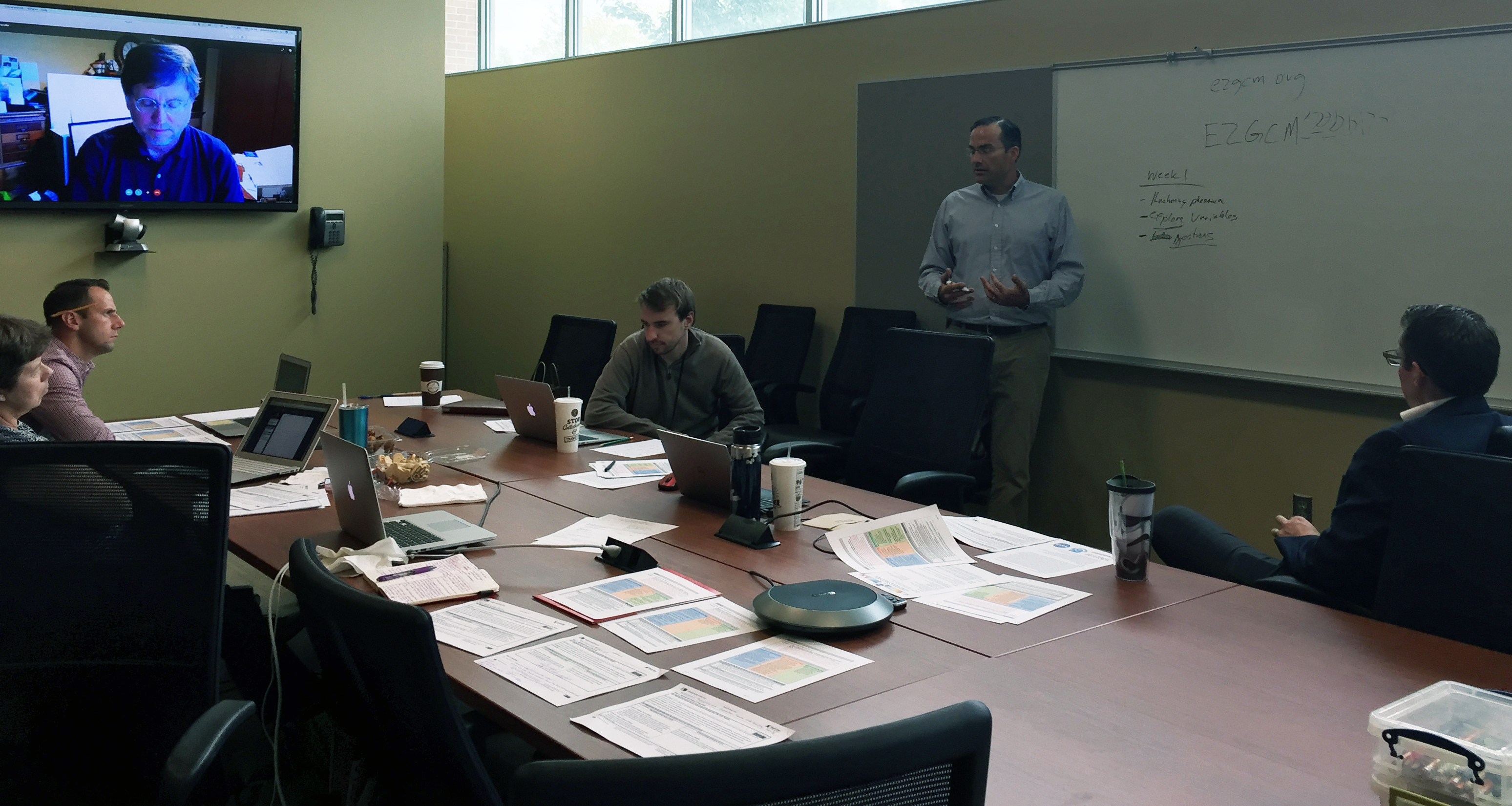
We’re looking forward to continuing these discussions and working with our collaborating teachers as we move forward with development of the curriculum module, planned for pilot implementation in spring, 2018.
]]>
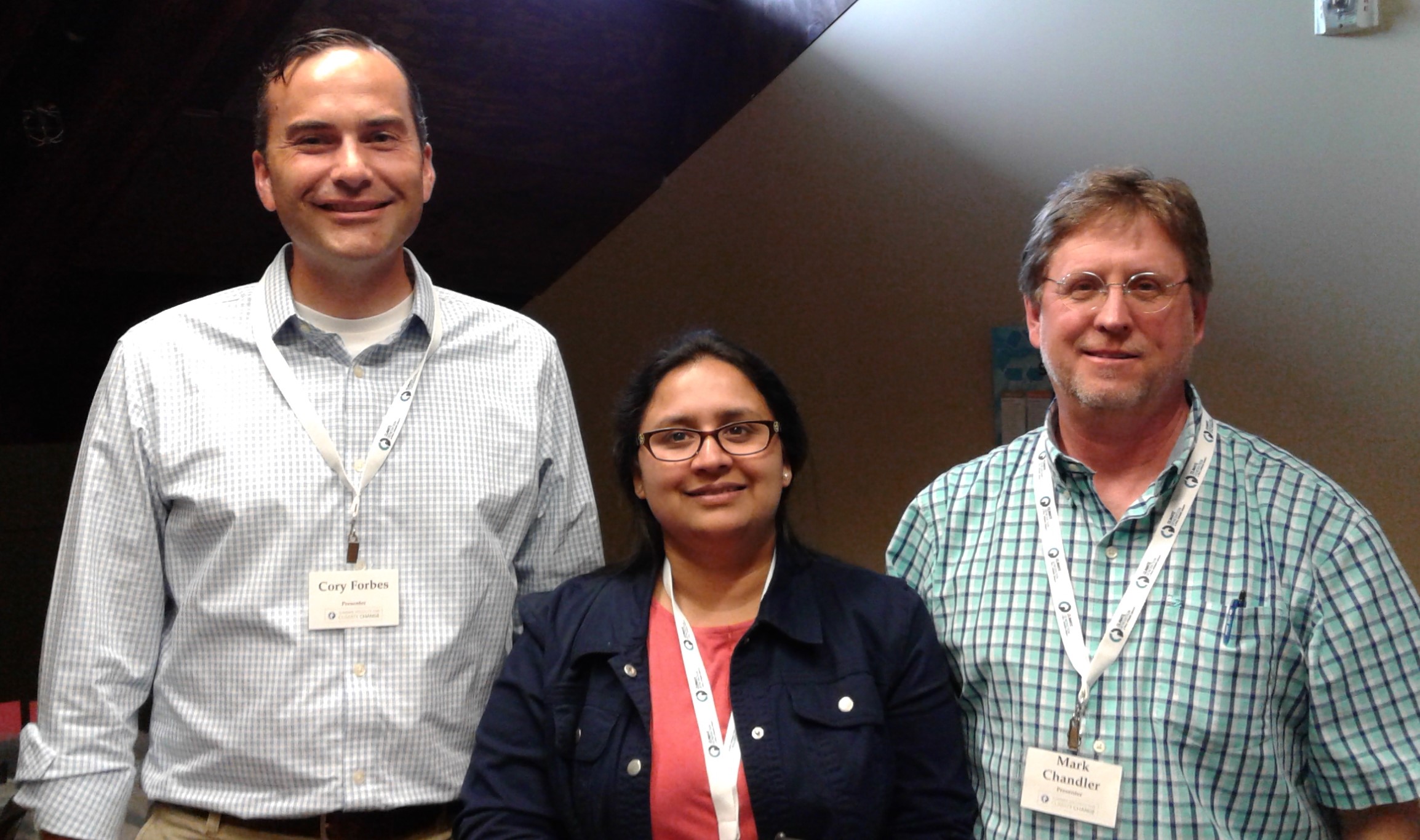
 I am excited to announce our new project funded by the National Science Foundation’s Discovery Research K-12 program (DRL 1720838 and 1719872). In the High School Students’ Climate Literacy through Epistemology of Scientific Modeling (CliMES) project, we will engage in a 4-year, mixed-methods, design-based research project to investigate classroom use of EzGCM (Easy Global Climate Modeling), a web-based climate modeling suite designed to provide non-scientists experiences with climate modeling. We are developing and implementing a 6-week climate science module for secondary science classrooms designed around EzGCM. Each year, we will collect and analyze evidence of students’ model-based reasoning about climate, including pre-/post- measures of students’ conceptual and epistemic knowledge, curriculum-embedded modeling tasks, interviews, and videorecorded observations of instruction to investigate two research questions: 1) how do secondary students develop epistemic and conceptual knowledge about the Earth’s climate and climate science? and 2) how do secondary science teachers support students’ use of EzGCM to develop epistemic and conceptual knowledge about the Earth’s climate and climate science? The project will impact over 50 secondary teachers and 3000 secondary students over four years and leverages a new partnership between Columbia University and the University of Nebraska-Lincoln, promoting cross-fertilization between climate scientists and science educators, in partnership with Nebraska school districts.
 ]]>
]]>