Warning: Undefined array key 1 in /home/cory/www/www/wp-content/plugins/visitors-online/visitors-online.php on line 505

Warning: Undefined array key 2 in /home/cory/www/www/wp-content/plugins/visitors-online/visitors-online.php on line 505

Warning: Cannot modify header information - headers already sent by (output started at /home/cory/www/www/wp-content/plugins/visitors-online/visitors-online.php:505) in /home/cory/www/www/wp-content/plugins/visitors-online/visitors-online.php on line 557

Warning: Cannot modify header information - headers already sent by (output started at /home/cory/www/www/wp-content/plugins/visitors-online/visitors-online.php:505) in /home/cory/www/www/wp-content/plugins/contact-form-plugin/contact_form.php on line 100

Warning: Cannot modify header information - headers already sent by (output started at /home/cory/www/www/wp-content/plugins/visitors-online/visitors-online.php:505) in /home/cory/www/www/wp-includes/feed-rss2.php on line 8
elementary teachers – Cory T Forbes http://www.corytforbes.com Associate Dean for Research and Fenton Wayne Robnett Professor, University of Texas at Arlington Tue, 21 May 2019 08:33:32 +0000 en-US hourly 1 https://wordpress.org/?v=6.8.10 MoHSES project capstone research published http://www.corytforbes.com/05-03-2019/entry_1153 http://www.corytforbes.com/05-03-2019/entry_1153#respond Fri, 03 May 2019 08:16:26 +0000 http://www.corytforbes.com/?p=1153

The final, capstone study from the MoHSES project has been published in the May issue of the Journal of Research in Science Teaching. This comparative research investigates the implementation and 3rd-grade students’ model-based learning associated with two versions of the FOSS Water unit. The study provides evidence that students experiencing the project-developed, model-based version of the curriculum showed greater gains in their model-based explanations for water-related phenomena than did students experiencing the standard version of the unit. These findings reflect many years of hard, collaborative work with truly amazing elementary teachers to develop effective resources to support model-based science teaching and learning. This manuscript was a significant team effort that I am very pleased to see in print.

Baumfalk, B., Bhattacharya, D., Vo, T., Forbes, C.T., Zangori, L., & Schwarz, C. (2019).  Impact of model-based curriculum and instruction on 3rd-grade students’ scientific explanations for the hydrosphere. Journal of Research in Science Teaching, 56(5), 570-597.

]]>
http://www.corytforbes.com/05-03-2019/entry_1153/feed 0
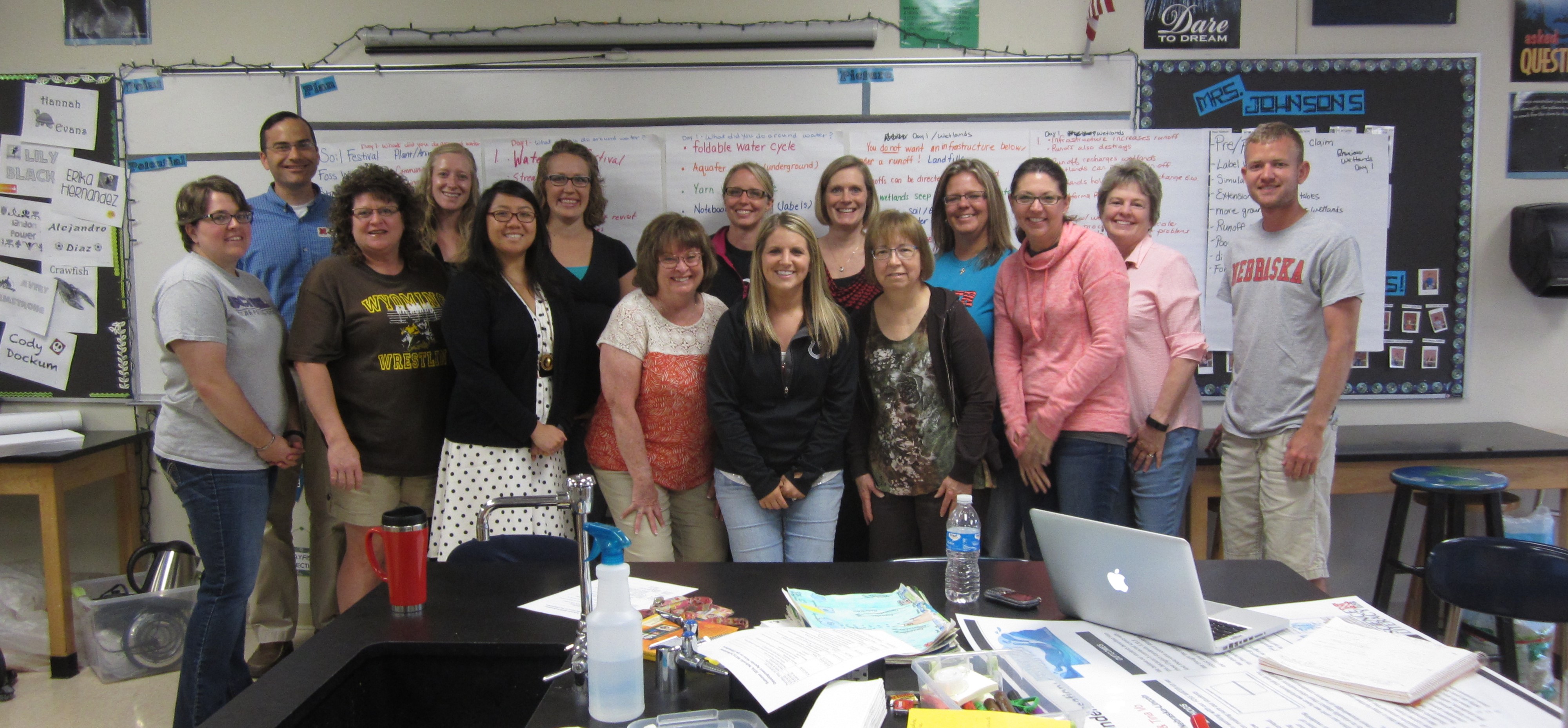
Wrapping up the Nebraska WETS Project http://www.corytforbes.com/05-28-2016/entry_658 http://www.corytforbes.com/05-28-2016/entry_658#respond Sat, 28 May 2016 02:05:01 +0000 http://www.corytforbes.com/?p=658 Today we wrapped up our 18-month Water for Elementary Teachers of Science in Nebraska (NE WETS) project with 2 consecutive days of workshops held at Hastings Middle School.  The project provided us to opportunity to work with an amazing group of K-6 teachers from in and around Hastings, NE.  Thanks go out to wonderful UNL project team members Tina Vo and Tonya Bernadt, Chad Dumas, Ph.D., HPS Director of Curriculum, Instruction, and Assessment, and the teachers who made the project possible.  IMG_7551

]]>
http://www.corytforbes.com/05-28-2016/entry_658/feed 0
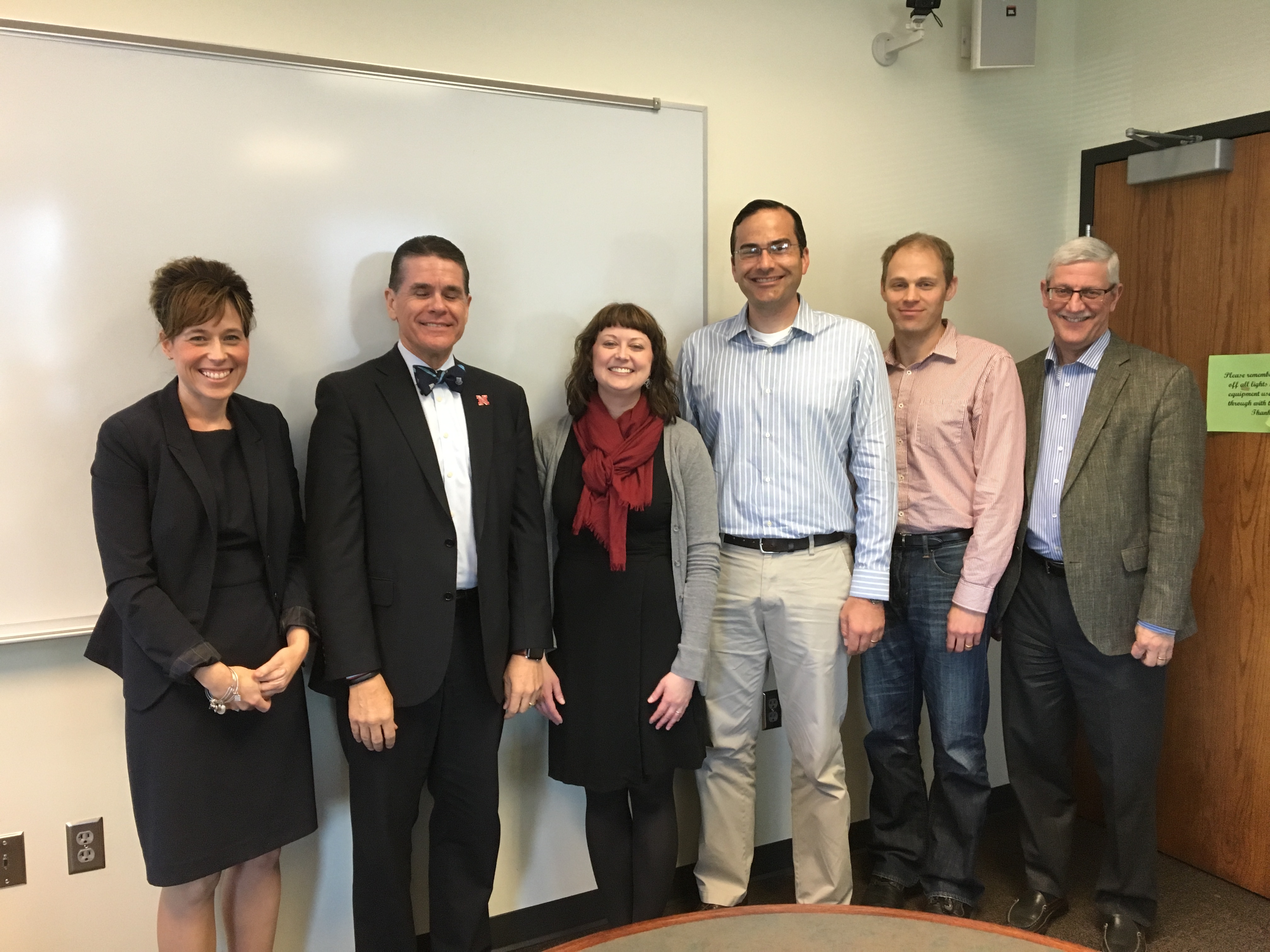
Jaime Sabel, Ph.D. http://www.corytforbes.com/04-08-2016/entry_676 http://www.corytforbes.com/04-08-2016/entry_676#respond Fri, 08 Apr 2016 01:58:20 +0000 http://www.corytforbes.com/?p=676 Jaime's defense 1Congratulations to Dr. Jaime Sabel for successfully defending her dissertation study, entitled, “USE OF SCAFFOLDS TO SUPPORT UNDERGRADUATE STUDENTS IN LEARNING AND UNDERSTANDING BIOLOGICAL CONCEPTS”. Jaime has worked on the RAES project for the past 4 years, first at the University of Iowa and later at UNL. It has been a pleasure to work with Jaime as both project PI and her advisor. In August, Jaime will begin a new position as an Assistant Professor of Biology Education in the Department of Biological Sciences at the University of Memphis.

]]>
http://www.corytforbes.com/04-08-2016/entry_676/feed 0
2015 Nebraska WETS Workshop Series http://www.corytforbes.com/08-10-2015/entry_541 http://www.corytforbes.com/08-10-2015/entry_541#respond Mon, 10 Aug 2015 13:06:21 +0000 http://www.corytforbes.com/?p=541 Thanks to a fantastic group of elementary teachers for all their hard work in this first summer of the Water for Elementary Teachers of Science (Nebraska WETS) project.  We had a great workshop series in June and August of this summer focused on scientific modeling, formative assessment, and water science.   The summer component was also offered as graduate course credit (NRES 898 – Teaching and Learning about Water Systems).  We appreciate the support of Hastings Public Schools for being a wonderful district partner and allowing us access to amazing facilities at Hastings Middle School.  NE WETS Summer 2015

]]>
http://www.corytforbes.com/08-10-2015/entry_541/feed 0
Article published in International Journal of Science Education http://www.corytforbes.com/09-28-2014/entry_572 http://www.corytforbes.com/09-28-2014/entry_572#respond Sun, 28 Sep 2014 12:01:09 +0000 http://www.corytforbes.com/?p=572

A new paper was published in the September issue of the International Journal of Science Education.

Forbes, C.T., Lange, K., Möller, K., Biggers, M., Laux, M., & Zangori, L. (2014). Explanation-construction in 4th-grade classrooms in Germany and the United States: A cross-national comparative video study. International Journal of Science Education, 36(14), 2367-2390.

This research involved a comparative study of 4th-grade classrooms in the U.S. and Germany involving samples of videorecorded science instruction around a variety of topics.  We used the P-SOP instrument to characterize scientific practices and processes of inquiry in which students were observed taking part.  While there were many similarities between the nature of science teaching and learning in classrooms in the two countries, we also found key differences in how students were afforded opportunities to formulate scientific explanations, a crucial scientific practice highlighted in the Next Generation Science Standards.  This study was a wonderful opportunity to extend the impact of PIESC3 project through an very fulfilling and enjoyable collaboration with colleagues from the University of Münster in Germany.  I thank Kim Lange, Kornelia Möller, and Mira Laux for their contributions and collegiality.  I look forward to continuing to work together on issues related to elementary science.
 

]]>
http://www.corytforbes.com/09-28-2014/entry_572/feed 0
Article published in Science Education http://www.corytforbes.com/08-22-2014/entry_570 http://www.corytforbes.com/08-22-2014/entry_570#respond Fri, 22 Aug 2014 13:14:00 +0000 http://www.corytforbes.com/?p=570

A new paper was published in the July issue of Science Education.

Zangori, L. & Forbes, C.T. (2014). Scientific practices in elementary classrooms: 3rd-grade students’ scientific explanations for seed structure and function. Science Education, 98(4), 614-639.

This research focuses on 3rd-grade students’ scientific explanations for plant-related phenomena as part of the FOSS Structures of Life curriculum module across multiple classrooms.  Drawing from a diverse array of data, the study explores connections between teachers’ conceptions, their observed instructional practices, and student.  The study provides evidence that teachers’ professional ideas and pedagogical reasoning about evidence-based explanation in science – a crucial scientific practice highlighted in the Next Generation Science Standards – play an important role in their instructional practices to support students’ explanation-construction in the classroom.

]]>
http://www.corytforbes.com/08-22-2014/entry_570/feed 0
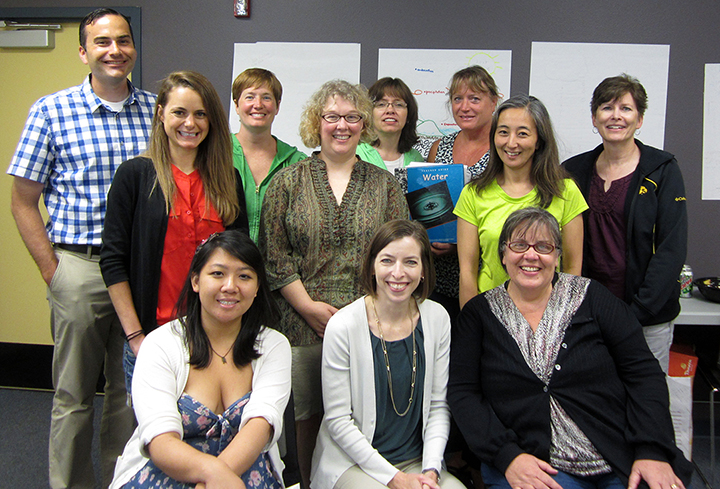
2014 MoHSES summer workshop http://www.corytforbes.com/06-23-2014/entry_373 http://www.corytforbes.com/06-23-2014/entry_373#respond Mon, 23 Jun 2014 20:51:59 +0000 http://www.corytforbes.com/?p=373 IMG_6179This month the MoHSES team had the wonderful opportunity to work with a fantastic group of 7 3rd-grade teachers who have been involved in the MoHSES project over the past two years.  The collaborative workshops were held at the Grant Wood Area Education Agency in Coralville, Iowa where we spent a few days talking and thinking about supporting elementary students’ use of models to make sense of the water cycle.  We are incredibly lucky to be working with such a knowledgeable and engaged group of teachers as partners and co-designers in this exciting project.

]]>
http://www.corytforbes.com/06-23-2014/entry_373/feed 0
Invited Talk at the International Conference on New Teacher Competencies http://www.corytforbes.com/06-08-2014/entry_358 http://www.corytforbes.com/06-08-2014/entry_358#respond Sun, 08 Jun 2014 19:56:40 +0000 http://www.corytforbes.com/?p=358 imageEarly this month I had the opportunity to travel to Enschede in the Netherlands to give an invited talk at the International Conference on New Teacher Competencies.  The conference was held at the University of Twente and was sponsored by DoCenter, Center for Knowledge Creation on Teacher Development and Curriculum Design, and SLO (National Institute for Curriculum Development in The Netherlands).  Through my talk, entitled ‘Supporting teachers use of curriculum materials for science: Empirically-grounded perspectives on teachers’ curriculum design competencies’, I was able to share conceptual foundations and research findings from our work with elementary teachers to use instructional materials for science in the PIESC3, RAES, and MoHSES projects.   It was a great opportunity to learn from others similarly interested in instructional design, teacher design teams, and supporting teachers to use curriculum materials effectively.  Thank you to Jules Pieters, Joke Voogt, Adam Handelzalts, Nienke Nieveen, Maaike Heitink, and Sandra Schele for being wonderful hosts and making the trip both productive and enjoyable.

]]>
http://www.corytforbes.com/06-08-2014/entry_358/feed 0
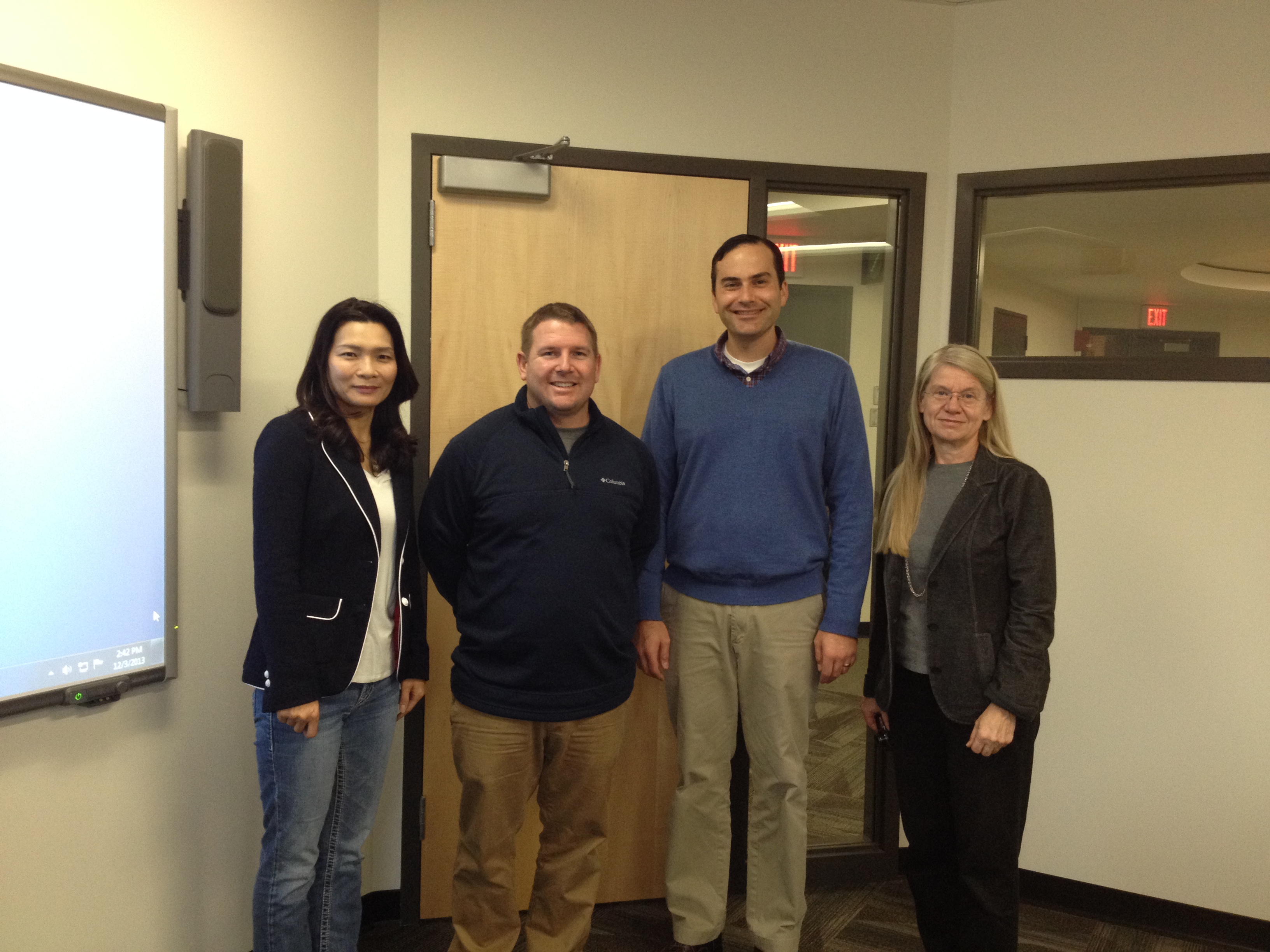
Dave Pierson successfully defends masters thesis http://www.corytforbes.com/12-14-2013/entry_313 http://www.corytforbes.com/12-14-2013/entry_313#respond Sat, 14 Dec 2013 02:56:00 +0000 http://www.corytforbes.com/?p=313 IMG_1075Congratulations to Dave Pierson for successfully defending his masters thesis entitled Elementary teachers’ assessment actions and elementary science education: Formative assessment enactment in elementary science.  Dave used RAES-Iowa project data to conduct a comparative case study investigating elementary teachers’ reasoning about students’ ideas and classroom formative assessment practices.  His committee members were myself, Soonhye Park, Associate Professor of Science Education in the University of Iowa College of Education, and Gabrielle Ludwig, Professor in the UI Department of Occupational and Environmental Health.  Dave, great work on this substantial accomplishment!

]]>
http://www.corytforbes.com/12-14-2013/entry_313/feed 0
PIESC3 2013 publications http://www.corytforbes.com/11-02-2013/entry_289 http://www.corytforbes.com/11-02-2013/entry_289#respond Sat, 02 Nov 2013 01:35:40 +0000 http://www.corytforbes.com/?p=289 Core empirical results from the PIESC3 project were published this year in three journal articles:

Biggers, M., Forbes, C.T. , & Zangori, L. (2013). Elementary teachers’ curriculum design and pedagogical reasoning for supporting students’ comparison and evaluation of evidence-based explanations. The Elementary School Journal, 114(1), 48-72.

Forbes, C.T., Biggers, M., & Zangori, L. (2013). Investigating essential characteristics of scientific practices in elementary science learning environments: The Practices of Science Observation Protocol (P-SOP). School Science and Mathematics, 113(4), 180-190.

Zangori, L., Forbes, C.T., & Biggers, M. (2013). Fostering student sense-making in elementary science learning environments: Elementary teachers’ use of science curriculum materials to promote explanation-construction. Journal of Research in Science Teaching, 50(8), 887-1017.

Each of these studies involves the use of our newly-developed observation protocol, the P-SOP, to investigate inquiry practices in elementary classrooms.  The paper in School Science and Mathematics details the development and testing of the P-SOP, as well as a comparison of features of inquiry evident in observed elementary science instruction.   The other two articles are mixed-methods studies using the P-SOP explore opportunities afforded students to  formulate and evaluate evidence-based explanations.

]]>
http://www.corytforbes.com/11-02-2013/entry_289/feed 0