A new paper was published in the September issue of the International Journal of Science Education.
Forbes, C.T., Lange, K., Möller, K., Biggers, M., Laux, M., & Zangori, L. (2014). Explanation-construction in 4th-grade classrooms in Germany and the United States: A cross-national comparative video study. International Journal of Science Education, 36(14), 2367-2390.
This research involved a comparative study of 4th-grade classrooms in the U.S. and Germany involving samples of videorecorded science instruction around a variety of topics. We used the P-SOP instrument to characterize scientific practices and processes of inquiry in which students were observed taking part. While there were many similarities between the nature of science teaching and learning in classrooms in the two countries, we also found key differences in how students were afforded opportunities to formulate scientific explanations, a crucial scientific practice highlighted in the Next Generation Science Standards. This study was a wonderful opportunity to extend the impact of PIESC3 project through an very fulfilling and enjoyable collaboration with colleagues from the University of Münster in Germany. I thank Kim Lange, Kornelia Möller, and Mira Laux for their contributions and collegiality. I look forward to continuing to work together on issues related to elementary science.
]]>


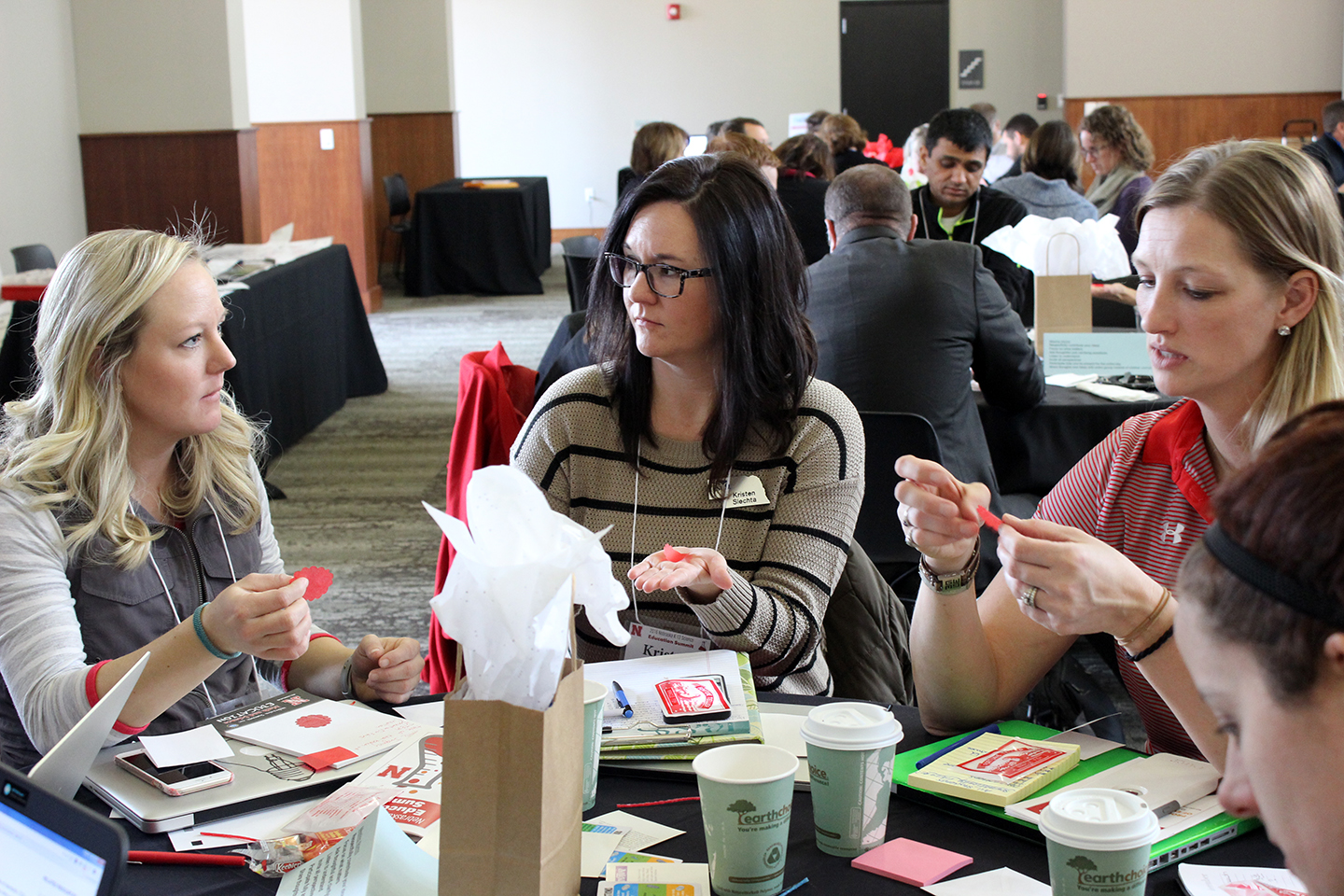
On Monday, December 12th, over 175 science educators from across the state of Nebraska had the opportunity to come together at Nebraska Innovation Campus in Lincoln for the Nebraska K-12 Science Education Summit. Organized and led by Sara Cooper, Science Education Director at the Nebraska Department of Education, and I, the event provided a forum for science education administrators, science teachers, STEM faculty, and stakeholders to engage in statewide discussions about K-12 science education efforts. This included a workshop on the Next Generation Science Standards and Nebraska state science standards, as well as concurrent sessions in which UNL faculty and others shared innovative science education resources and strategies with practitioners. We were fortunate to have Chancellor Ronnie Green stop by in the afternoon to welcome attendees and provide some critical insights into the importance of collaboration between K-12 schools and the NU system. The event was co-sponsored the Nebraska Department of Education, IANR Science Literacy, NebraskaSCIENCE, the Center for Science, Mathematics, and Computer Education, Nebraska 4-H, and the Nebraska Collaborative for Food, Energy, & Water Education. This was a wonderfully productive experience for all involved and we look forward to holding the event again in future years to enhance and synergize the teaching and learning of science in Nebraska.


Over the past year, our team has had the opportunity to work with teachers from Beatrice Middle School and