The final, capstone study from the MoHSES project has been published in the May issue of the Journal of Research in Science Teaching. This comparative research investigates the implementation and 3rd-grade students’ model-based learning associated with two versions of the FOSS Water unit. The study provides evidence that students experiencing the project-developed, model-based version of the curriculum showed greater gains in their model-based explanations for water-related phenomena than did students experiencing the standard version of the unit. These findings reflect many years of hard, collaborative work with truly amazing elementary teachers to develop effective resources to support model-based science teaching and learning. This manuscript was a significant team effort that I am very pleased to see in print.
Baumfalk, B., Bhattacharya, D., Vo, T., Forbes, C.T., Zangori, L., & Schwarz, C. (2019). Impact of model-based curriculum and instruction on 3rd-grade students’ scientific explanations for the hydrosphere. Journal of Research in Science Teaching, 56(5), 570-597.
]]>Forbes, C.T., Brozovic, N., Franz, T., Lally, D., & Petitt, D. (2018). Water in Society: An interdisciplinary course to support undergraduate students’ water literacy. Journal of College Science Teaching, 48(1), 36-42.
]]>Teasdale, R., Scherer, H., Holder, L., Boger, R., & Forbes, C.T. (2018). Research on teaching about Earth in the context of societal problems. In K. St. John (Ed.), Community Framework for Geoscience Education Research (pgs. 49-60). National Association of Geoscience Teachers. Retrieved from https://doi.org/10.25885/ger_framework/5.
Many thanks to Kristen St. John and the other PIs for leading this effort!
]]>


 ]]>
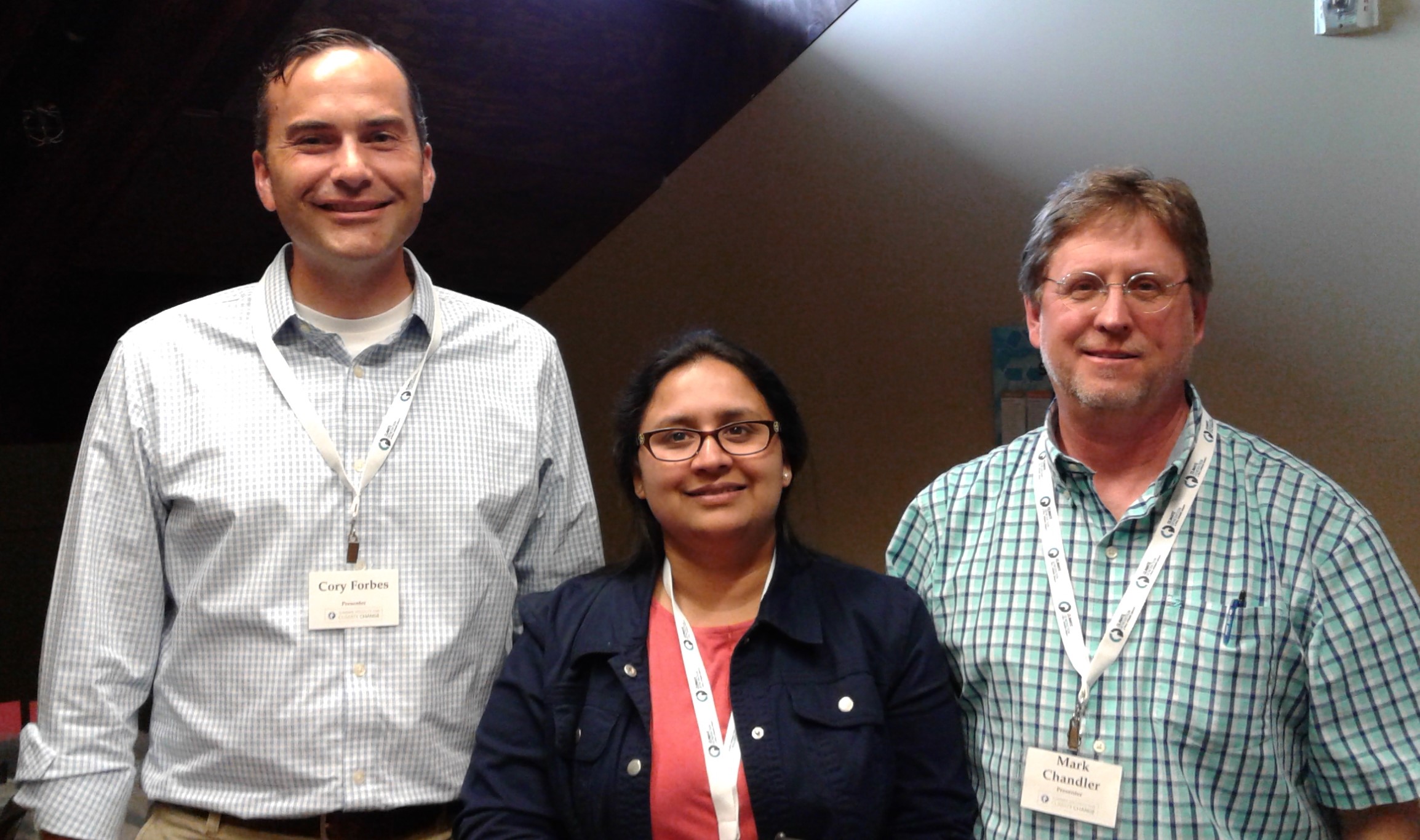
 I am excited to announce our new project funded by the National Science Foundation’s Discovery Research K-12 program (DRL 1720838 and 1719872). In the High School Students’ Climate Literacy through Epistemology of Scientific Modeling (CliMES) project, we will engage in a 4-year, mixed-methods, design-based research project to investigate classroom use of EzGCM (Easy Global Climate Modeling), a web-based climate modeling suite designed to provide non-scientists experiences with climate modeling. We are developing and implementing a 6-week climate science module for secondary science classrooms designed around EzGCM. Each year, we will collect and analyze evidence of students’ model-based reasoning about climate, including pre-/post- measures of students’ conceptual and epistemic knowledge, curriculum-embedded modeling tasks, interviews, and videorecorded observations of instruction to investigate two research questions: 1) how do secondary students develop epistemic and conceptual knowledge about the Earth’s climate and climate science? and 2) how do secondary science teachers support students’ use of EzGCM to develop epistemic and conceptual knowledge about the Earth’s climate and climate science? The project will impact over 50 secondary teachers and 3000 secondary students over four years and leverages a new partnership between Columbia University and the University of Nebraska-Lincoln, promoting cross-fertilization between climate scientists and science educators, in partnership with Nebraska school districts.
 ]]>
What is Scientific Modeling? from CADREK12 on Vimeo.
]]> Congratulations to Tina Vo on being selected as a 2016-17 CADRE Fellow! This wonderful experience, administered by the Community for Advancing Discovery Research in Education (CADRE) and open to graduate students funded on NSF DRK-12 projects, will afford many productive opportunities to network and develop skills that will enhance Tina’s preparation for early-career research and teaching. Tina has worked on the MoHSES project for the past 4 years as a graduate assistant, first as a masters student at the University of Iowa and now as a Ph.D. student at UNL. She is currently involved in a significant number of research studies investigating both student and teacher dimensions of MoHSES work focused on model-based teaching and learning about water systems at the elementary level. She has also contributed to other externally-funded water education projects, including NE WETS and WELS2.
]]>


 ]]>