WELS2 summer 2017 workshop

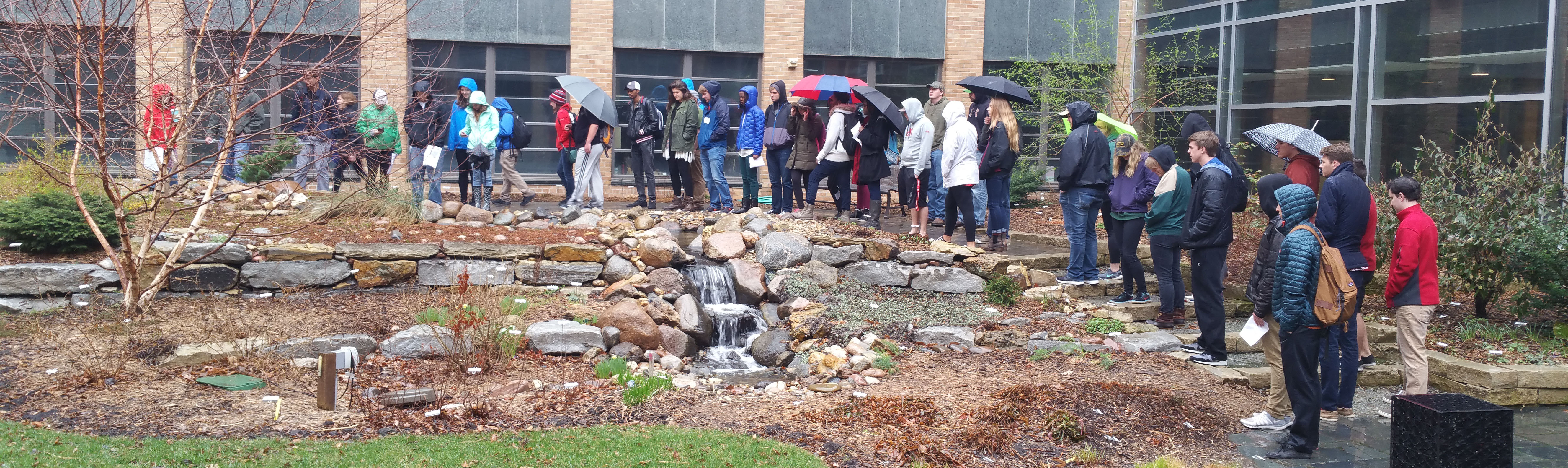
In June, the WELS2 project team held a 1-week workshop for more than 30 Nebraska middle- and high school science teachers at the University of Nebraska-Lincoln.  The workshop focused on supporting teachers to learn to use a computer-based groundwater modeling tool, the Hydrogeology Challenge, and to develop instructional materials and supports that would enable them to use this tool within their existing science curriculum.
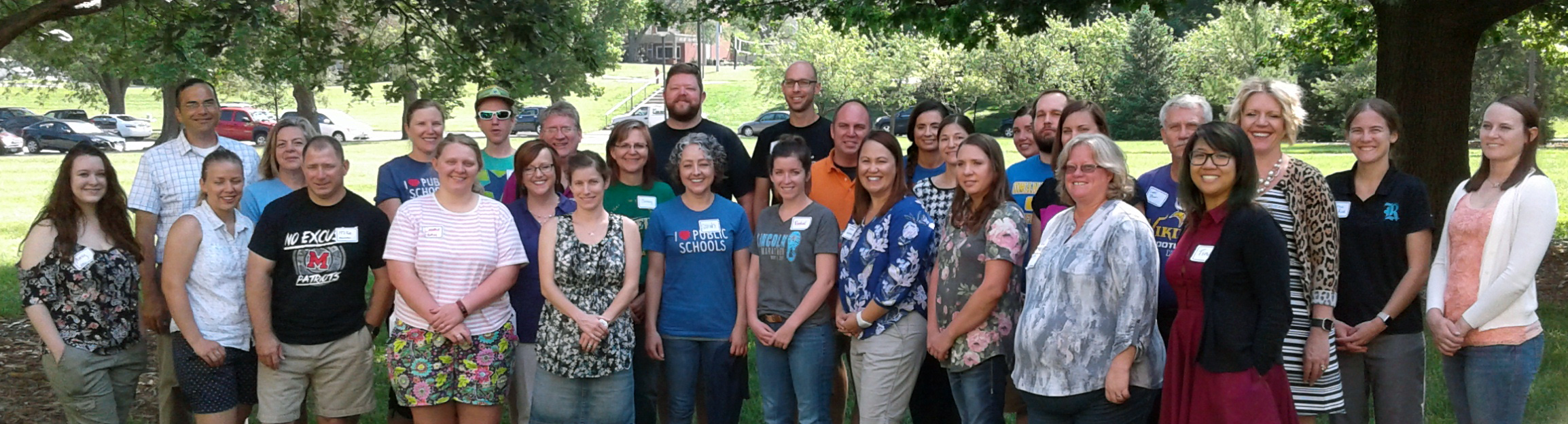
As part of the workshop, teachers explored the Next Generation Science Standards, conducted water-related investigations, learned about the scientific practice of modeling, and worked on curricular resources to support their own teaching.  Teachers also had the opportunity to participate in the workshop as part of a UNL graduate course – NRES 898 Teaching and Learning about Water Systems.  We thank our project partners from the Groundwater Foundation and Water for Food Global Institute for contributing to making this workshop a successful experience for all involved.  We look forward to continuing to work with NE teachers through ongoing academic year activities and a teacher research experience in summer, 2018.

MoHSES project research published in IJSE

As the MoHSES project rapidly draws to a close, we are very pleased to continue publishing project research that reflects our project work over the 5 years of the project.  Our latest study, published in the International Journal of Science Education, explores implementation of the revised FOSS Water unit and 3rd-grade students’ model-based reasoning about water over the first two years of the project.  The study provides evidence that the ‘modeling-enhanced” version of the curriculum positively impacts student learning, though these effects vary greatly by teacher.  How teachers implement the curriculum appears to significantly impact the sophistication of students’ model-based explanations for water-related phenomena.

Zangori, L., Vo, T., Forbes, C.T., & Schwarz, C. (2017).  Supporting 3rd-grade students’ model-based explanations about groundwater: A quasi-experimental study of a curricular intervention.  In International Journal of Science Education, 39(11), 1421-1442.


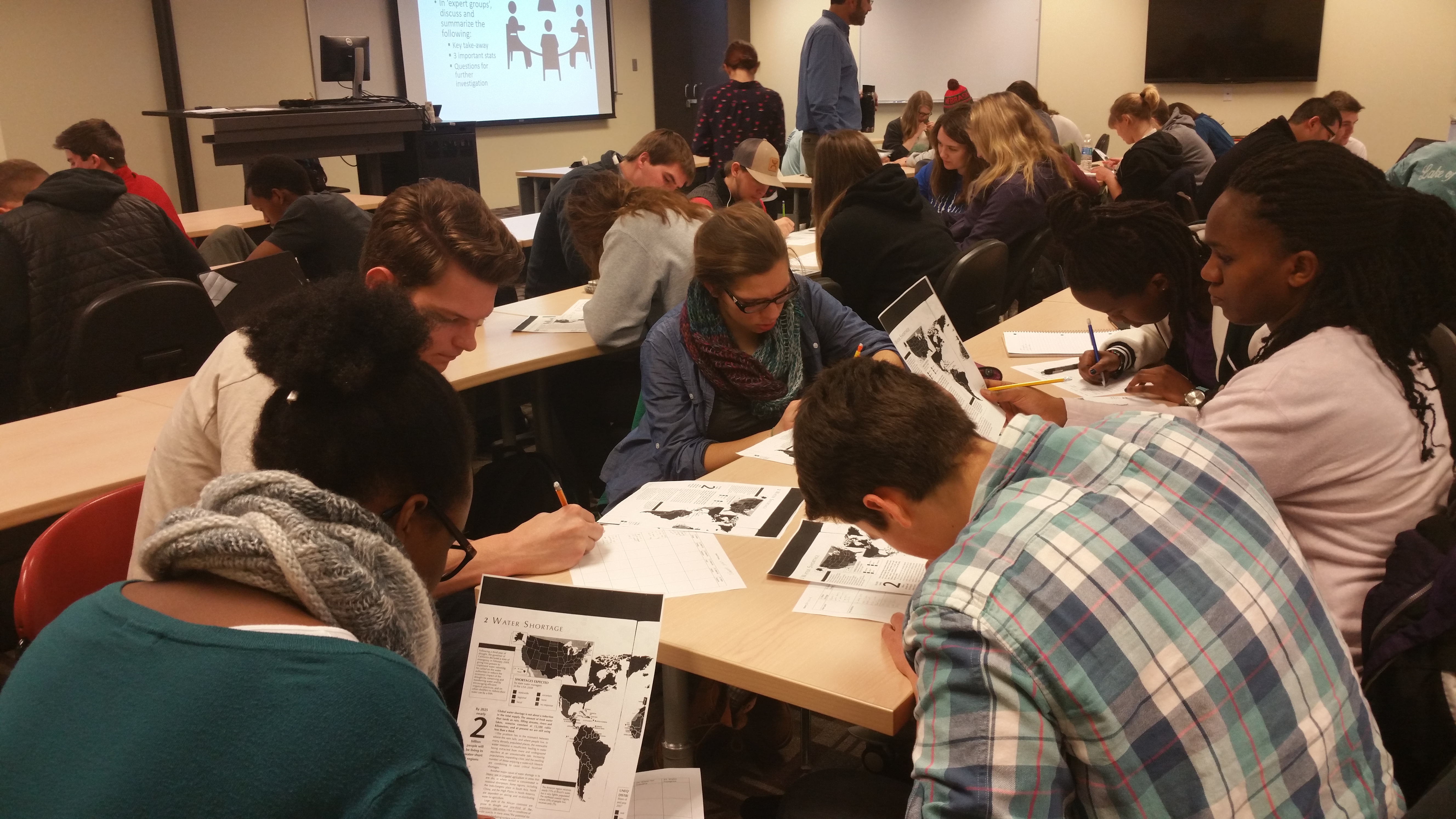
SCIL 109 Water in Society Spring, 2017

As part of the WELL project, our team had the chance to teach our new course – SCIL 109 Water in Society – this past spring semester.  It was an amazing opportunity work with 45 undergraduate students, both STEM and non-STEM majors from an array of programs.  It was also a wonderfully enriching experience to collaborate with colleagues spanning multiple disciplines as part of our instructional team.  The course touched on core hydrology concepts, exploration of contemporary real-world water-related challenges, and opportunities to communicate about both the scientific and non-scientific dimensions of these issues.  Students used computer-based water modeling tools based upon authentic datasets, worked in collaborative teams on long-term projects, participated in site visits, and developed and presented infographics to attendees at an international water-focused conference.   Please see our spring, 2017 syllabus and course calendar here.

CADRE video series: What is Scientific Modeling?

In a new video series from CADRE, a network for STEM education researchers funded by the National Science Foundation’s Discovery Research K-12 (DR K-12) program, I had a chance to share a bit about the importance of scientific modeling in science learning environments. It’s very exciting to be featured as part of a group, including Dan Damelin (The Concord Consortium) and Brian Reiser (Northwestern University), discussing this important topic related to our MoHSES, NE WETS, WELS2, and WELL projects.

What is Scientific Modeling? from CADREK12 on Vimeo.

CADRE video series: The Impact of Education Research

In a new video series from CADRE, a network for STEM education researchers funded by the National Science Foundation’s Discovery Research K-12 (DR K-12) program, I had a chance to share a bit about the importance of education research. It’s very exciting to be featured as part of a group, including Christine Cunningham (Museum of Science), Kathy Perkins (University of Colorado, Boulder), Vikram Kapila (NYU), discussing the empirical work that goes hand-in-hand with educational design and development associated with all my projects.

The Impact of Education Research from CADREK12 on Vimeo.

SENCER Leadership Fellow

I am pleased and honored to have been named a a SENCER Leadership Fellow by the National Center for Science and Civic Engagement (NCSCE). The SENCER network represents a commitment by STEM faculty and administrators, both locally and nationally, who are deeply aware of the critical role science plays in cultivating and maintaining a healthy society and functioning democracy.  It was a pleasure to host former Executive Director Wm. David Burns as a visiting speaker at UNL and to engage with the SENCER community in recent years.  I look forward to continuing to contribute to SENCER and NCSCE in the years to come.

WELS2 project funded

Our team is excited to announce grant support for the Water Education Leaders for Secondary Science (WELS2) project at the University of Nebraska-Lincoln (UNL).  Through funding from USDA-NIFA and the NE Coordinating Commission for Postsecondary Education, we will develop, implement, and evaluate a 15-month sustained professional development program for middle and secondary STEM teachers in the state of Nebraska focused on teaching and learning about water resources.  This project is grounded in a partnership involving the UNL School of Natural Resources, Robert B. Daugherty Water for Food Global Institute, UNL water scientists, the Groundwater Foundation, and six Nebraska school districts.  More information about the project can be found here and here.

Back to Germany

In December I had the opportunity to travel back to Germany to spend a week collaborating with colleagues Dr. Jan C. Schubert, Professor for Geographical and Geoscience Education at the University of Erlangen-Nuremberg, and Dr. Kim Lange-Schubert, Professor of Elementary STEM Education at the University of Leipzig.  It was wonderful to spend time working with both of their research teams, as well as to attend Dr. Lange-Schubert’s inaugural address at the University of Leipzig.  I look forward to continued collaboration and ongoing productive endeavors with these amazing scholars and science educators.  2016-11-30 15.36.25 HDR 2016-12-01 16.47.53 2016-12-02 11.47.59

2016 Nebraska K-12 Science Education Summit

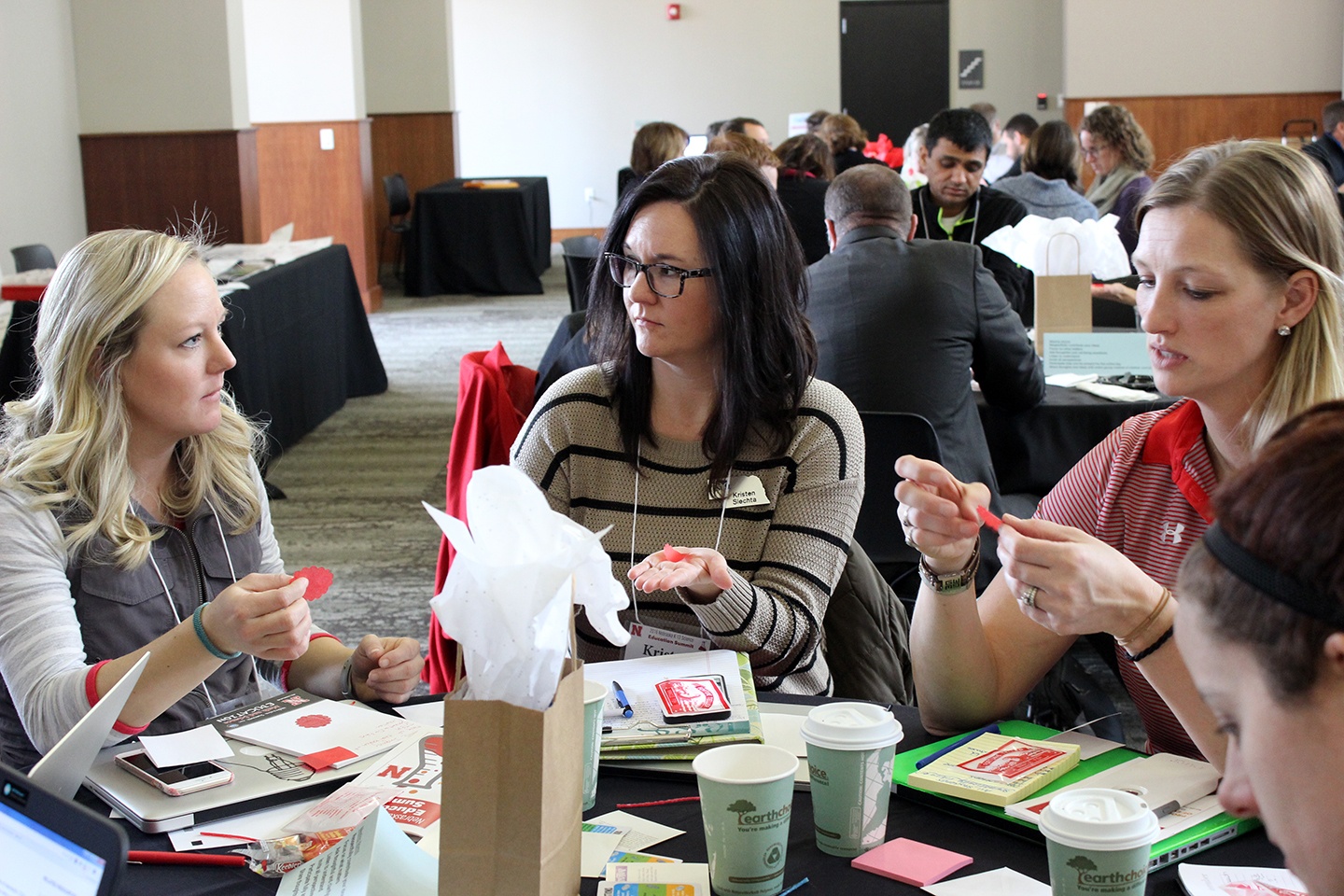
On Monday, December 12th, over 175 science educators from across the state of Nebraska had the opportunity to come together at Nebraska Innovation Campus in Lincoln for the Nebraska K-12 Science Education Summit.  Organized and led by Sara Cooper, Science Education Director at the Nebraska Department of Education, and I, the event provided a forum for science education administrators, science teachers, STEM faculty, and stakeholders to engage in statewide discussions about K-12 science education efforts.  This included a workshop on the Next Generation Science Standards and Nebraska state science standards, as well as concurrent sessions in which UNL faculty and others shared innovative science education resources and strategies with practitioners.  We were fortunate to have Chancellor Ronnie Green stop by in the afternoon to welcome attendees and provide some critical insights into the importance of collaboration between K-12 schools and the NU system.  The event was co-sponsored the Nebraska Department of Education, IANR Science Literacy, NebraskaSCIENCE, the Center for Science, Mathematics, and Computer Education, Nebraska 4-H, and the Nebraska Collaborative for Food, Energy, & Water Education.  This was a wonderfully productive experience for all involved and we look forward to holding the event again in future years to enhance and synergize the teaching and learning of science in Nebraska.

Fall, 2016 teaching SCIL 101 Science and Decision-Making for a Complex World

In the Fall, 2016 semester, I had the wonderful opportunity to teach one of four large sections a required course for all CASNR students – SCIL 101 Science and Decision-Making for a Complex World.  The class, re-conceptualized and redeveloped from a long-standing introductory course (AGRI/NRES 103 Introduction to Agricultural and Natural Resource Systems), involves students learning to make science-informed decisions about agriculture and natural resource issues.  Comprised of four modules designed around food, energy, and water issues, SCIL 101 offers students the opportunity explore these challenges issues from multiple perspectives, ultimately conducting independent research on a question of their choosing.  My section of the class this fall had 130 students, almost half of which were CASNR undergraduate students from Rwanda studying in IANR to become future agricultural leaders in their home country.  I am also very lucky to have had the opportunity to work with an amazing team of graduate and undergraduate teaching assistants, including WELL project graduate students Diane Lally and Destini Petitt, and Science Literacy graduate student McKenzie Peterson.

20160818_121856