Category Archives: Research

Research published on elementary students’ reasoning about food systems

Congrats to Molly Brandt for publication of her thesis work in the Journal of Agricultural Education.  This study explored the use of Evidence-Centered Design to develop, validate, and test assessment items aligned with standards for student learning focused on the integration of STEM and agriculture.  The study provides important insights into upper elementary (grades 3-5) students’ reasoning about interdisciplinary STEM concepts and contributes to efforts to design an assessment system designed around these standards that can provide an essential tool for program evaluation.

Brandt, M., Forbes, C.T., & Keshwani, J. (2017). Exploring elementary students’ scientific knowledge of agriculture using Evidence-Centered Design. Journal of Agricultural Education, 58(3), 134-149.
Kicking off CliMES collaborative work with LPS teachers

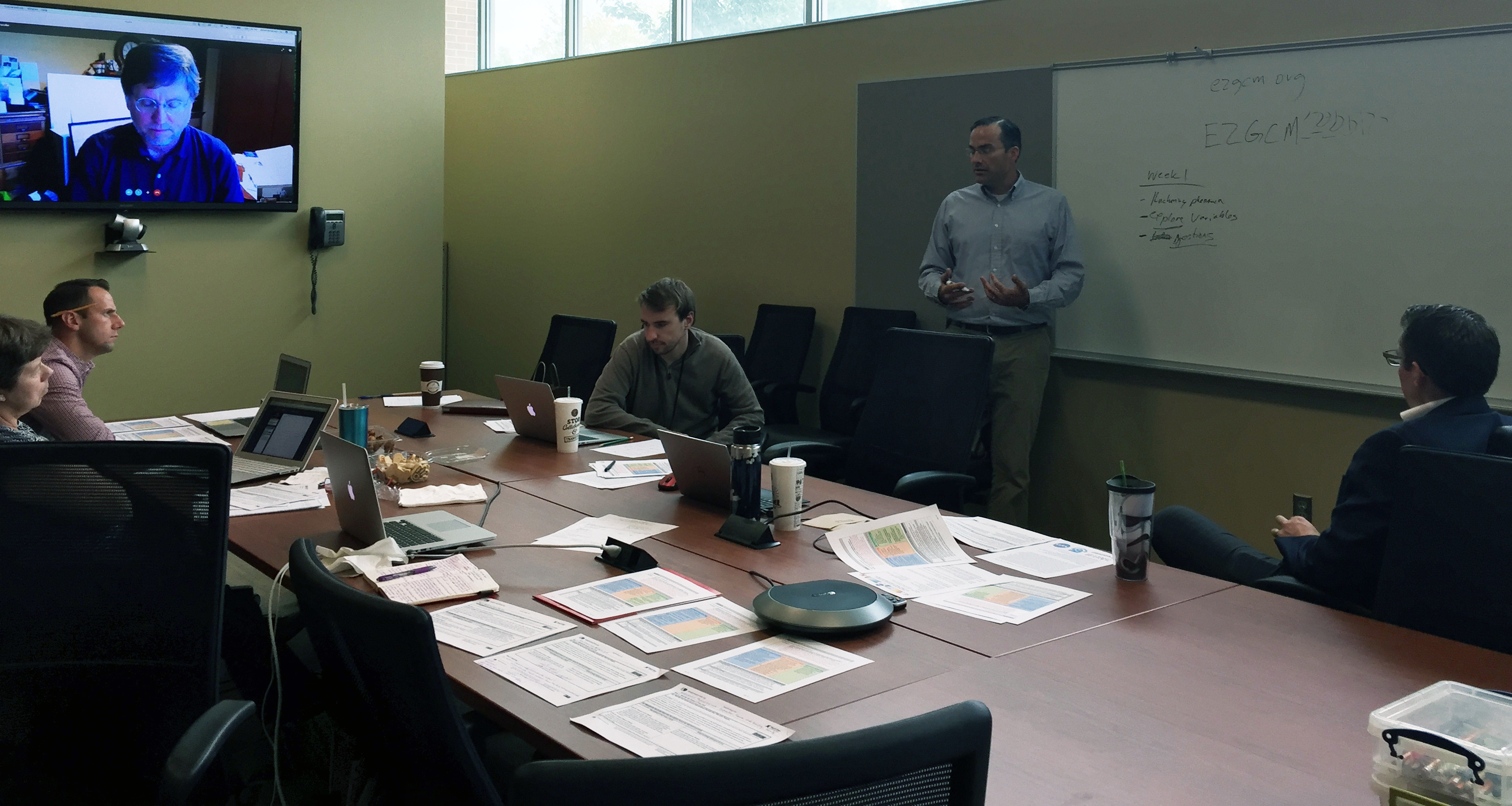
At the end of September, our CliMES team came together with a group of high school teachers from our district partner – Lincoln Public Schools – to begin collaborating on development of the CliMES curriculum module.  We are working to develop a 6-week module designed around EzGCM for LPS’ 9th-grade Geoscience course.  The proposed module will be aligned with national, state, and district standards, with a particular emphasis on HS-ESS3-5:

Analyze geoscience data and the results from global climate models to make an evidence-based forecast of the current rate of global or regional climate change and associated future impacts to Earth systems.

We’re looking forward to continuing these discussions and working with our collaborating teachers as we move forward with development of the curriculum module, planned for pilot implementation in spring, 2018.


Research published on student metacognition in undergraduate biology

Congrats to Dr. Jaime Sabel for publication of dissertation work in CBE–Life Sciences Education.  This study explored the used of reflective scaffolds and metacognitive tools to support and enhance undergraduate students’ learning in the context of an introductory undergraduate course for non-majors.  Study findings provide insight into how students use these tools, how they can be integrated into the design of course activities, and ways in which they productively impact students’ life science learning.

Sabel, J., Dauer, J., & Forbes, C.T. (2017).  Introductory biology students’ use of enhanced answer keys and reflection questions to engage in metacognition and enhance understanding.  CBE–Life Sciences Education, 16(3), 2-12.

NSF DRK-12 project funded – CliMES

I am excited to announce our new project funded by the National Science Foundation’s Discovery Research K-12 program (DRL 1720838 and 1719872). In the High School Students’ Climate Literacy through Epistemology of Scientific Modeling (CliMES) project, we will engage in a 4-year, mixed-methods, design-based research project to investigate classroom use of EzGCM (Easy Global Climate Modeling), a web-based climate modeling suite designed to provide non-scientists experiences with climate modeling. We are developing and implementing a 6-week climate science module for secondary science classrooms designed around EzGCM. Each year, we will collect and analyze evidence of students’ model-based reasoning about climate, including pre-/post- measures of students’ conceptual and epistemic knowledge, curriculum-embedded modeling tasks, interviews, and videorecorded observations of instruction to investigate two research questions: 1) how do secondary students develop epistemic and conceptual knowledge about the Earth’s climate and climate science? and 2) how do secondary science teachers support students’ use of EzGCM to develop epistemic and conceptual knowledge about the Earth’s climate and climate science?  The project will impact over 50 secondary teachers and 3000 secondary students over four years and leverages a new partnership between Columbia University and the University of Nebraska-Lincoln, promoting cross-fertilization between climate scientists and science educators, in partnership with Nebraska school districts.

Published research on undergrad students’ reasoning about water SSIs

Many thanks to all members of our research and instructional team who collaborated on a study investigating undergraduate students’ reasoning about water-focused socioscientific issues.  Carried out in the first iteration of the revised SCIL 101 course (formerly AGRI/NRES 103) with more than 200 students, study results illustrate strengths and limitations of students’ thinking about the use of groundwater for agriculture in the context of a multi-week course module.  Thanks to Dr. Jaime Sabel for leading this effort!

Sabel, J.L., Vo, T., Alred, A., Dauer, J.M., & Forbes, C.T. (2017). Undergraduate students’ scientifically-informed decision-making about socio-hydrological issues. Journal of College Science Teaching, 46(6), 64-72.

MoHSES project research published in IJSE

As the MoHSES project rapidly draws to a close, we are very pleased to continue publishing project research that reflects our project work over the 5 years of the project.  Our latest study, published in the International Journal of Science Education, explores implementation of the revised FOSS Water unit and 3rd-grade students’ model-based reasoning about water over the first two years of the project.  The study provides evidence that the ‘modeling-enhanced” version of the curriculum positively impacts student learning, though these effects vary greatly by teacher.  How teachers implement the curriculum appears to significantly impact the sophistication of students’ model-based explanations for water-related phenomena.

Zangori, L., Vo, T., Forbes, C.T., & Schwarz, C. (2017).  Supporting 3rd-grade students’ model-based explanations about groundwater: A quasi-experimental study of a curricular intervention.  In International Journal of Science Education, 39(11), 1421-1442.


CADRE video series: What is Scientific Modeling?

In a new video series from CADRE, a network for STEM education researchers funded by the National Science Foundation’s Discovery Research K-12 (DR K-12) program, I had a chance to share a bit about the importance of scientific modeling in science learning environments. It’s very exciting to be featured as part of a group, including Dan Damelin (The Concord Consortium) and Brian Reiser (Northwestern University), discussing this important topic related to our MoHSES, NE WETS, WELS2, and WELL projects.

What is Scientific Modeling? from CADREK12 on Vimeo.

CADRE video series: The Impact of Education Research

In a new video series from CADRE, a network for STEM education researchers funded by the National Science Foundation’s Discovery Research K-12 (DR K-12) program, I had a chance to share a bit about the importance of education research. It’s very exciting to be featured as part of a group, including Christine Cunningham (Museum of Science), Kathy Perkins (University of Colorado, Boulder), Vikram Kapila (NYU), discussing the empirical work that goes hand-in-hand with educational design and development associated with all my projects.

The Impact of Education Research from CADREK12 on Vimeo.

WELS2 project funded

Our team is excited to announce grant support for the Water Education Leaders for Secondary Science (WELS2) project at the University of Nebraska-Lincoln (UNL).  Through funding from USDA-NIFA and the NE Coordinating Commission for Postsecondary Education, we will develop, implement, and evaluate a 15-month sustained professional development program for middle and secondary STEM teachers in the state of Nebraska focused on teaching and learning about water resources.  This project is grounded in a partnership involving the UNL School of Natural Resources, Robert B. Daugherty Water for Food Global Institute, UNL water scientists, the Groundwater Foundation, and six Nebraska school districts.  More information about the project can be found here and here.

Back to Germany

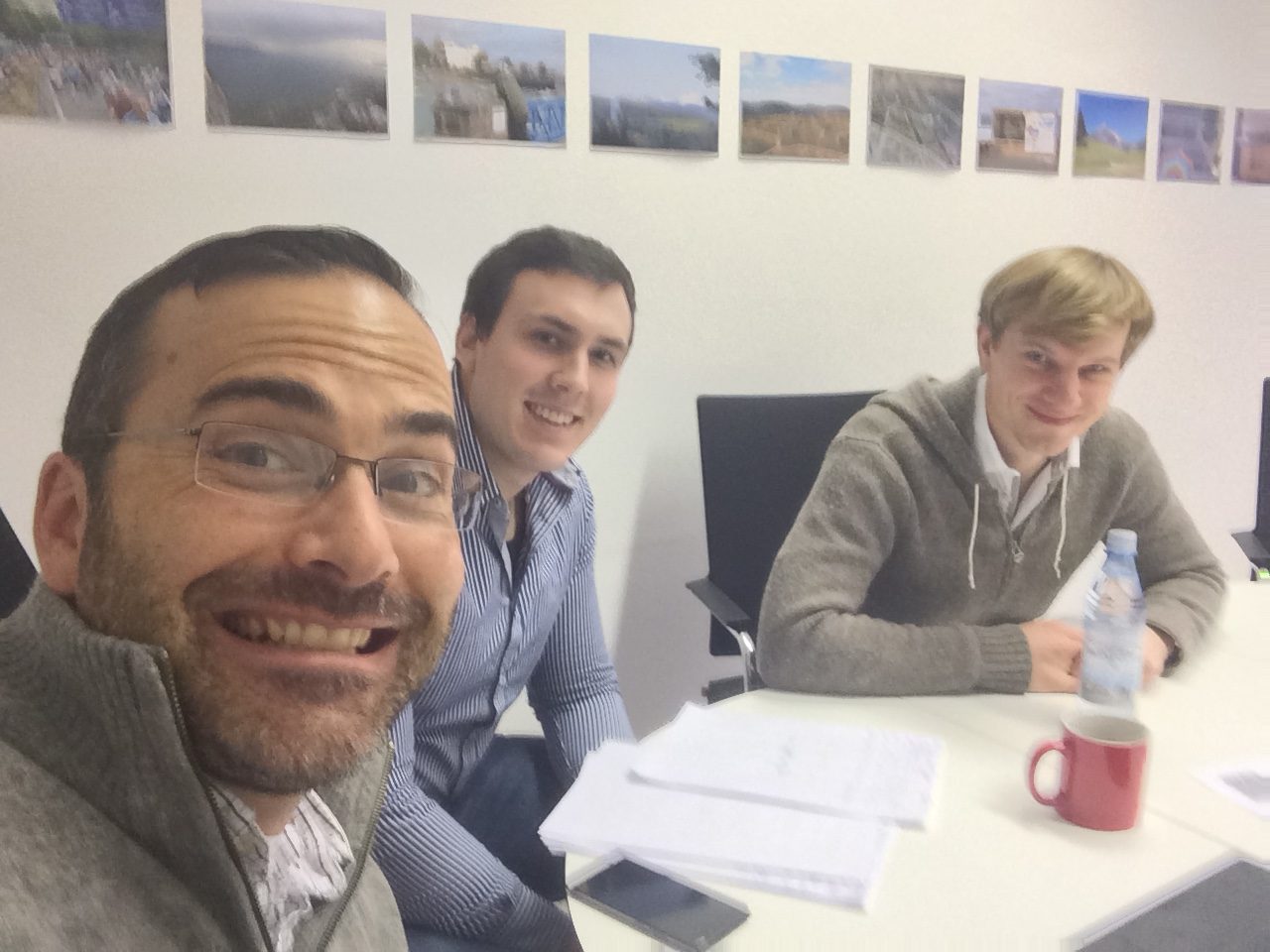
In December I had the opportunity to travel back to Germany to spend a week collaborating with colleagues Dr. Jan C. Schubert, Professor for Geographical and Geoscience Education at the University of Erlangen-Nuremberg, and Dr. Kim Lange-Schubert, Professor of Elementary STEM Education at the University of Leipzig.  It was wonderful to spend time working with both of their research teams, as well as to attend Dr. Lange-Schubert’s inaugural address at the University of Leipzig.  I look forward to continued collaboration and ongoing productive endeavors with these amazing scholars and science educators.  2016-11-30 15.36.25 HDR 2016-12-01 16.47.53 2016-12-02 11.47.59