Forbes Group presentations @ NARST, 2016

The Forbes team attended the 2016 annual meeting of the National Association for Research in Science Teaching (NARST), held April 14-17 in Baltimore, MD.  We had the opportunity to present a variety of empirical work from the RAES, MoHSES, NCAL, and WELL projects.  We look forward to the 2017 meeting in San Antonio!NARST 2016 Group 2

Brandt, M., Forbes, C., & Keshwani, J. (2016). Operationalizing science in applied contexts: Developing measures for elementary students’ understanding of STEM dimensions of food systems. Paper presented at the 2016 annual meeting of the National Association of Research in Science Teaching (NARST), Baltimore, MD

Sabel, J., Vo, T., Alred, A., Dauer, J., & Forbes, C. (2016). Undergraduate students’ scientifically-informed decision-making about water-based socioscientific issues. Poster presented at the 2016 annual meeting of the National Association of Research in Science Teaching (NARST), Baltimore, MD.

Sabel, J., Forbes, C., & Zangori, L. (2016). Use of structured formative assessment assignments to engage preservice teachers with life science concepts. Paper presented at the 2016 annual meeting of the National Association of Research in Science Teaching (NARST), Baltimore, MD.
Vo, T., Forbes, C. T. (2016). Learning to support students’ model-based learning about the water cycle: A three-year longitudinal case study of two 3rd-grade teachers. Paper presented at the 2016 annual meeting of the National Association of Research in Science Teaching (NARST), Baltimore, MD.
Zangori, L. & Forbes, C. T. (2016). Development of an empirically-based learning performances framework for 3rd-grade students’ model-based explanations about plant processes. Poster presented at the 2016 annual meeting of the National Association of Research in Science Teaching (NARST), Baltimore, MD.
Zangori, L., Vo, T., Forbes, C.T., Schwarz, C.V. (2016).  Exploring links between 3rd-grade students’ model-based explanations and teachers’ model-based science instruction about groundwater. Paper presented at the 2016 annual meeting of the National Association of Research in Science Teaching (NARST), Baltimore, MD.
Presentation at the 2016 Global Food Security Consortium symposium

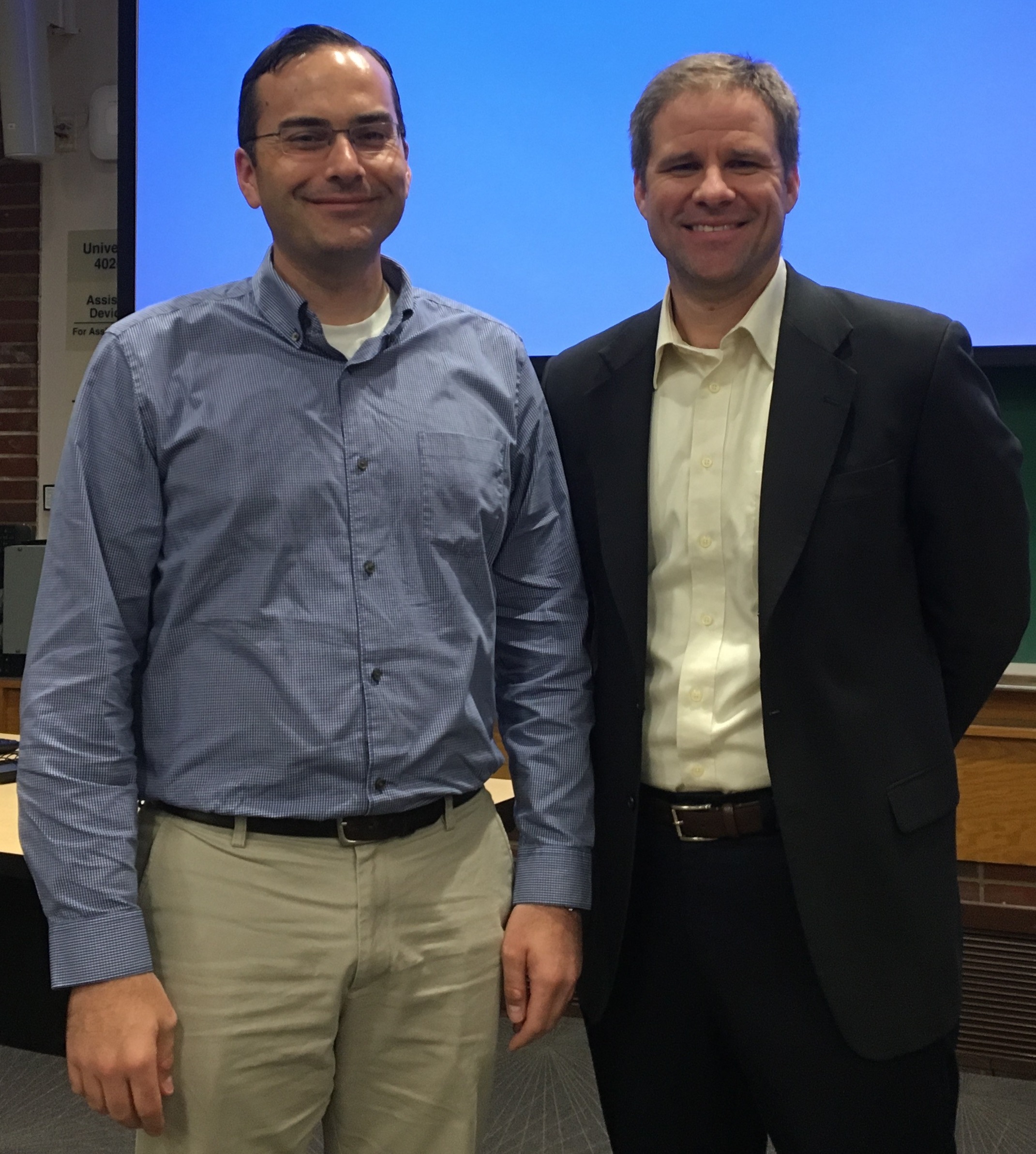
Forbes2I was honored to be invited to speak at this year’s symposium of the Global Food Security Consortium at Iowa State University. The annual event brings together innovators in agricultural education, research, and outreach, all engaged in the grand challenge of feeding 9.6 billion by 2050.  In my talk, entitled Cultivating science literacy in the nexus: Multidisciplinary STEM education across food, energy, water, I shared an overarching framework and sampling of current activities associated with the IANR Science Literacy Initiative at UNL.  This was an amazing opportunity not only to share exciting work that’s happening at UNL, but to learn about scientific research and community development work being conducted around the globe to address food security issues and contribute to cultivation of sustainable food systems.


Molly Brandt, M.A.S.

Congratulations to Molly Brandt for successfully defending her thesis study, entitled, “Exploring Elementary Students’ Agricultural and Scientific Knowledge using Evidence-Centered Design”.  For the past two years, Molly has worked as a graduate assistant with the Science Literacy Initiative on STEM education projects supported with funding from USDA-NIFA and National Agriculture in the Classroom program.  Her work involved developing and pilot testing assessment instruments to measure STEM-based agricultural literacy outcomes using interviews and assessment data from over 400 elementary students in school districts in Nebraska.   It has been a pleasure to work with Molly as both project PI and her advisor. Molly’s thesis study was conducted in partial fulfillment of requirements for the degree of Master of Applied Science in the College of Agricultural Sciences and Natural Resources.  Her committee members included Drs. Krista Adams from Teaching, Learning, and Teacher Education and Jennifer Keshwani from Biological Systems Engineering.Molly's defense 6

Jaime Sabel, Ph.D.

Jaime's defense 1Congratulations to Dr. Jaime Sabel for successfully defending her dissertation study, entitled, “USE OF SCAFFOLDS TO SUPPORT UNDERGRADUATE STUDENTS IN LEARNING AND UNDERSTANDING BIOLOGICAL CONCEPTS”. Jaime has worked on the RAES project for the past 4 years, first at the University of Iowa and later at UNL. It has been a pleasure to work with Jaime as both project PI and her advisor. In August, Jaime will begin a new position as an Assistant Professor of Biology Education in the Department of Biological Sciences at the University of Memphis.

Dr. Troy Sadler visits UNL

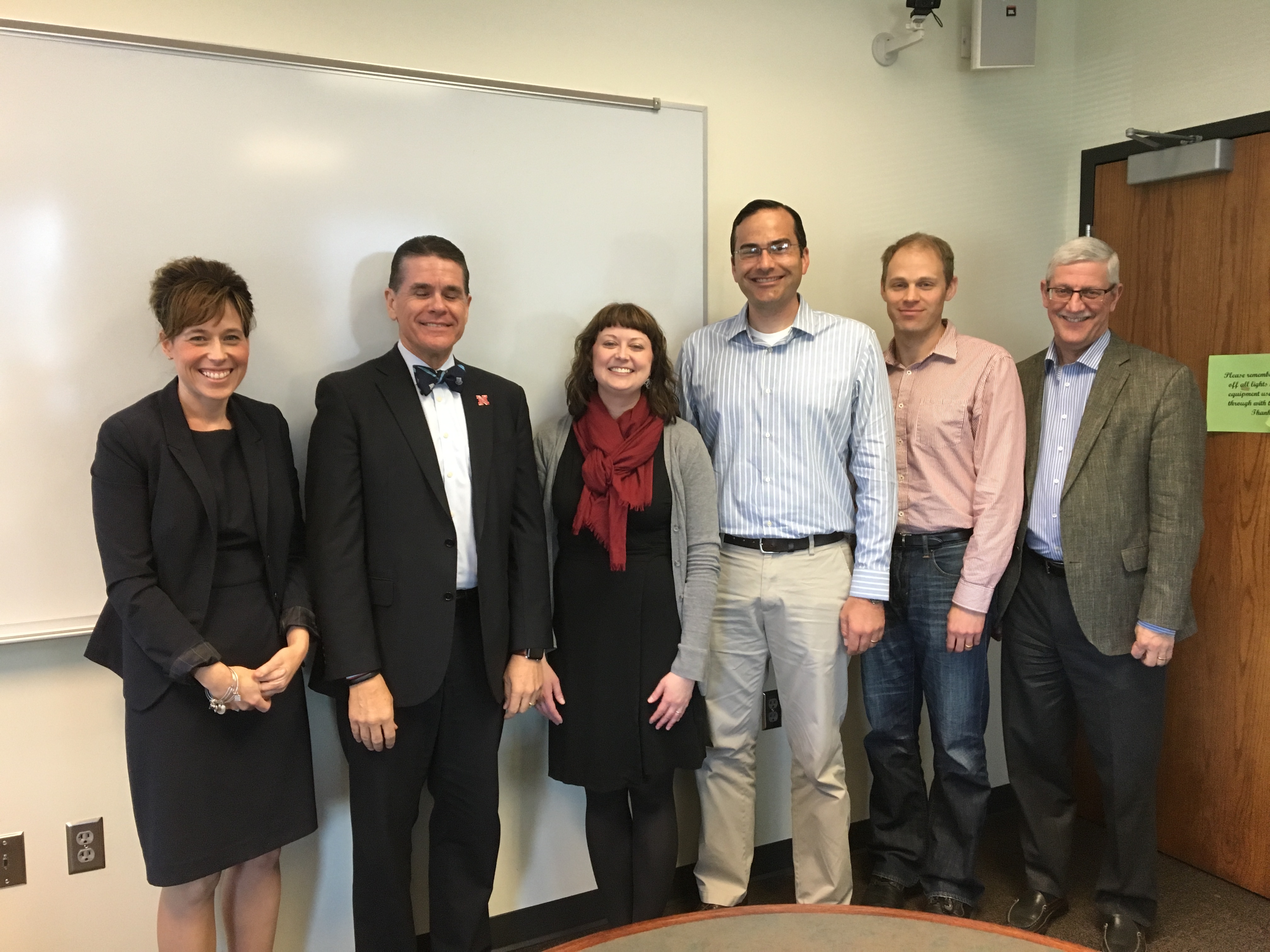
Cory Troy March 2016On Thursday, March 17th, we had the pleasure to host Dr. Troy Sadler from the University of Missouri at UNL to engage our community in discussions around science literacy and STEM education as part of our ongoing Science Literacy Initiative Seminar Series.  Dr. Sadler is Professor of Science Education in the College of Education’s Department of Learning, Teaching, and Curriculum and Director of the ReSTEM (Reimagining & Researching STEM Education) Institute.  His invited presentation, entitled, Socio-scientific Issues as a Central Element of Scientific Literacy: Toward a Framework for K-16 Teaching and Learning, was held in Henzlik Hall on UNL’s City Campus.  We are deeply appreciative of Dr. Sadler’s time, his willingness to learn about STEM education and discipline-based education research being conducted at UNL, and his incredibly helpful insights and feedback to help advance these efforts.

Farm Credit Services of America gives $100,000 to UNL Science Literacy Initiative

We are enormously grateful for the generous support recently provided to the Science Literacy Initiative by Farm Credit Services of America.  This $100,000 gift will have a significant impact on IANR’s ability to advance the initiative’s goals and objectives with a particular emphasis on K-12 STEM programming.   It is wonderful to continue working to build capacity for this initiative with the strong backing of our partners and stakeholders.

Elly Vandegrift visits UNL

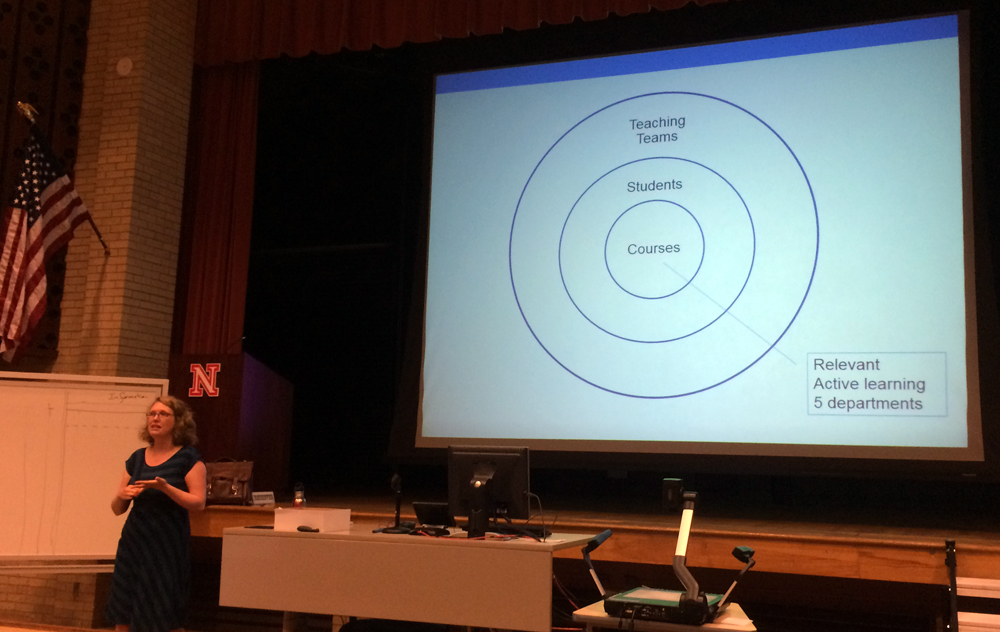
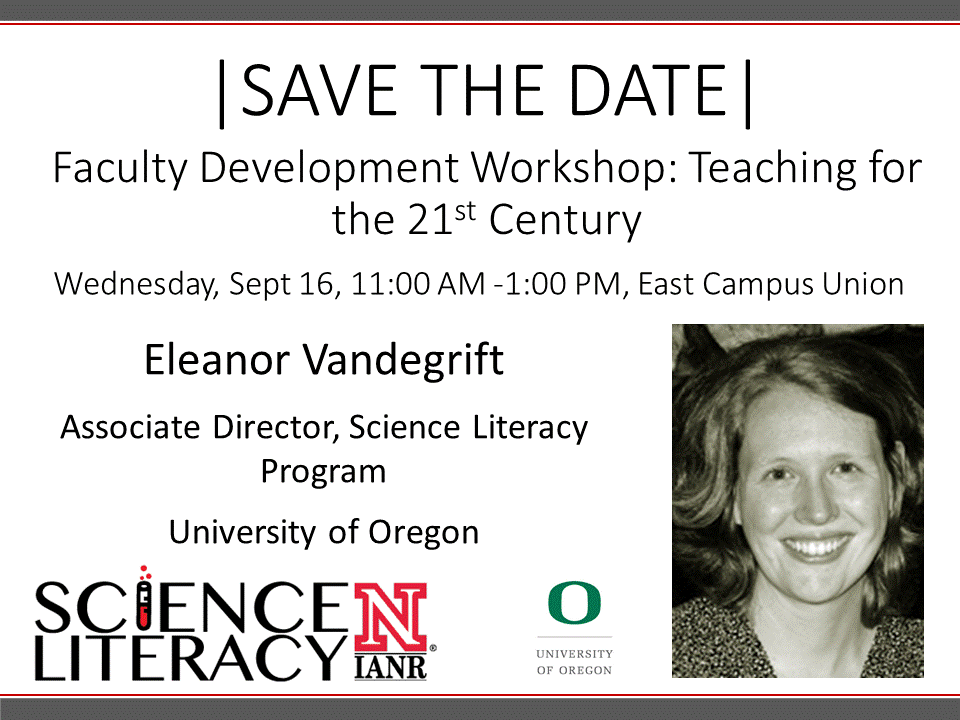
2015-09-16 09.37This month we were lucky to be able to host Eleanor (Elly) Vandegrift as a visiting scholar at UNL. Elly is the Associate Director of the Science Literacy Program (SLP) and a Senior Instructor in Biology at the University of Oregon (UO). The UO SLP is an institutional effort, originally funded by an HHMI grant, to help science faculty transform the classes they offer to non-science majors to foster science literacy. Her trip to UNL was part of the 2015 Science Literacy Initiative Seminar Series, which has been ongoing in May. While on campus, she had the opportunity to engage with the Science Literacy team, give an invited presentation, and facilitate a faculty development workshop on effective undergraduate science instruction. The visit was highly informative and productive, particularly to learn about the SLP at UO, which provides a model for our own postsecondary STEM education efforts in IANR. We look forward to continued discussions with Elly and future collaborations to advance larger-scale science literacy efforts in higher education contexts. Elly Vandegrift - faculty workshop


Dr. Jan Schubert visits UNL

2015-08-20 10.02During the month of August, IANR and UNL hosted Jan C. Schubert, Ph.D. as a visiting scholar from Germany. Dr. Schubert is Professor for Geographical and Geoscience Education at the University of Erlangen-Nuremberg, Germany. During his stay, he gave an invited presentation as part of the 2015 Science Literacy seminar serites, entitled, How does German schnitzel effect the environment? Preparing students and teachers for a scientifically-literate society through STEM-based education, in which he shared information and research focused on an environmental science course for preservice secondary science teachers in Germany. Dr. Schubert’s work provides a model for innovative STEM teacher education efforts at the undergraduate level that integrate experiences with science, scientific research, and pedagogy. During his stay, he was also able to participate in teacher professional development workshops associated with the TASRs program, observe AGRI 103, and work collaboratively on a new project focused on research and development on 6th-grade students’ STEM-informed decision-making about wind energy. We look forward to ongoing collaboration with Dr. Schubert and future opportunities to work together and learn from one another. Jan Schubert info sheet ad

2015 Nebraska WETS Workshop Series

Thanks to a fantastic group of elementary teachers for all their hard work in this first summer of the Water for Elementary Teachers of Science (Nebraska WETS) project.  We had a great workshop series in June and August of this summer focused on scientific modeling, formative assessment, and water science.   The summer component was also offered as graduate course credit (NRES 898 – Teaching and Learning about Water Systems).  We appreciate the support of Hastings Public Schools for being a wonderful district partner and allowing us access to amazing facilities at Hastings Middle School.  NE WETS Summer 2015