Over the past few months, we have had the opportunity to present a number of papers from project work at AERA, NARST, and NSTA. Please don’t hesitate to contact us with requests for papers or questions.
Biggers, M. & Forbes, C. T. (2015, April). Curriculum planning and enactment in elementary science: Beyond fidelity of implementation. Paper presented at the annual meeting of the National Association for Research in Science Teaching (NARST), Chicago, IL.
Forbes, C. T., Schwarz, C. V., Zangori, L., & Vo, T. (2015, March). Using models to support elementary students’ learning about water. Paper presented at the annual meeting of the National Science Teachers Association (NSTA), Chicago, IL.
Forbes, C. T., Vo, T., Schwarz, C. V., & Zangori, L. (2015, April). Exploring elementary teachers’ knowledge and practices for model-based science instruction about the water cycle. Paper presented at the annual meeting of the American Educational Research Association (AERA), Chicago, IL.
Forbes, C. T., Zangori, L., Vo, T. & Schwarz, C. V. (2015, April). Studying the impact of a design intervention on 3rd-grade students’ model-based explanations for water systems. Paper presented at the annual meeting of the National Association for Research in Science Teaching (NARST), Chicago, IL.
Sabel, J., Forbes, C. T. (2015, April). Elementary teachers’ use of life science content knowledge to inform formative assessment instructional decisions. Paper presented at the annual meeting of the National Association for Research in Science Teaching (NARST), Chicago, IL.
Sabel, J., Forbes, C. T., & Zangori, L. (2015, April). Preservice teachers’ use of content knowledge and formative assessment in a life science methods course. Paper presented at the annual meeting of the American Educational Research Association (AERA), Chicago, IL.
Sabel, J., Forbes, C.T., & Zangori, L. (2015, April). Content knowledge and formative assessment integration in a life sciences methods course for preservice teachers. Paper presented at the annual meeting of the National Association for Research in Science Teaching (NARST), Chicago, IL.
Vo, T., Forbes, C. T., Zangori, L., & Schwarz, S. (2015, April). Engaging students in scientific practices: The role of teachers in providing opportunities for student learning. Paper presented at the annual meeting of the National Association for Research in Science Teaching (NARST), Chicago, IL.
Zangori, L. & Forbes, C. T. (2015, April). Exploring 3rd-grade students’ model-based explanations about the interactions between plant processes and the hydrosphere. Paper presented at the annual meeting of the National Association for Research in Science Teaching (NARST), Chicago, IL.
Zangori, L. & Forbes, C. T. (2015, April). Exploring 3rd-grade students’ model-based explanations about the interactions between plant processes and the hydrosphere. Paper presented at the annual meeting of the American Educational Research Association (AERA), Chicago, IL.
Zangori, L. Forbes, C., Schwarz, C. V., & Vo, T. (2015, April). Supporting 3rd-grade students’ model-based explanations about the water cycle: A quasi-experimental study of a curricular intervention. Paper presented at the annual meeting of the American Educational Research Association (AERA), Chicago, IL.

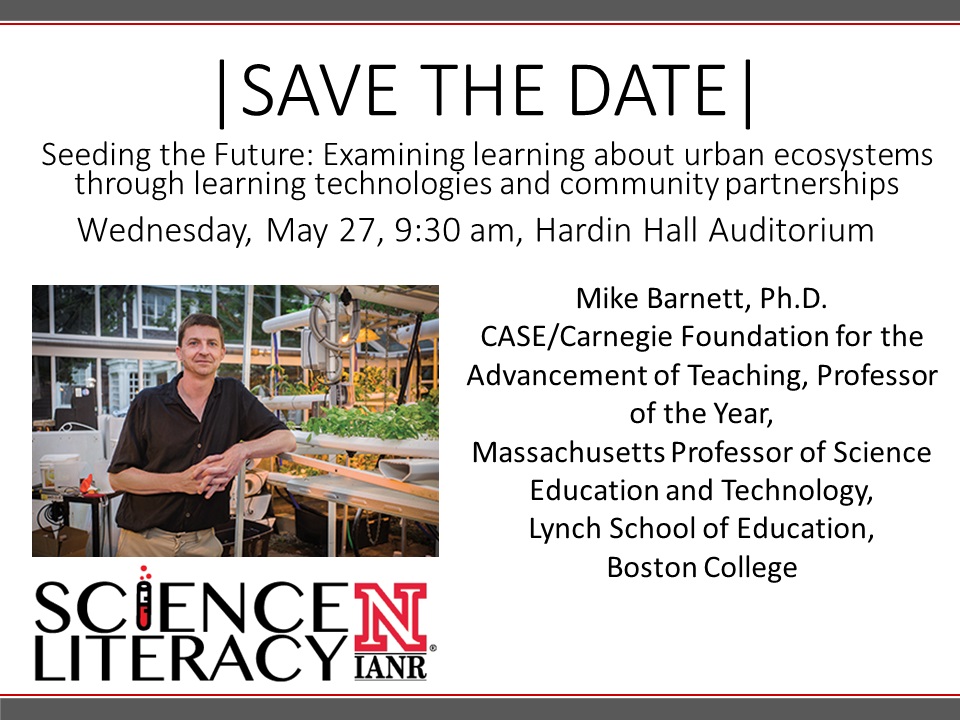
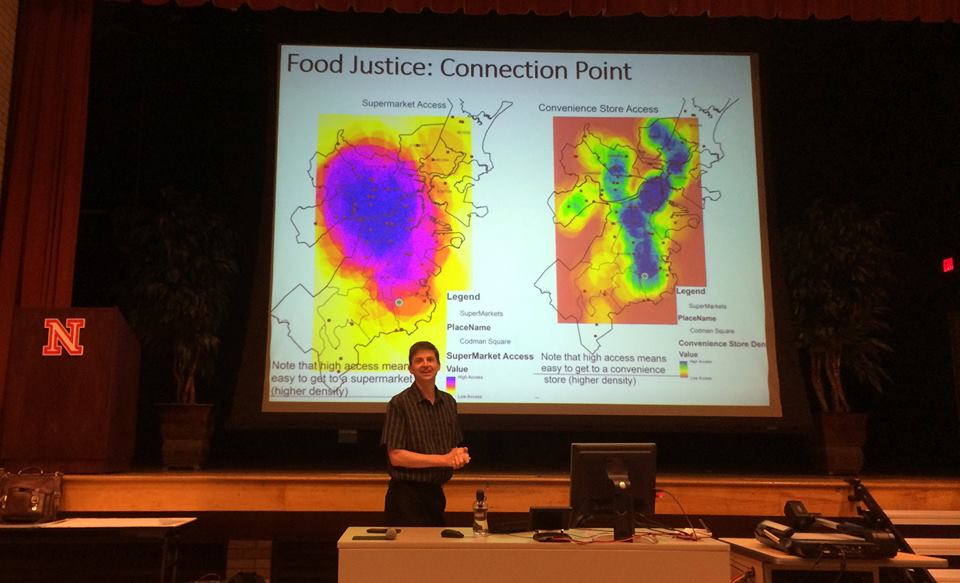 It has been a pleasure to host Mike Barnett as a visiting scholar at UNL over the past few days. Dr. Barnett is Professor of Science Education and Technology in the Lynch School of Education at Boston College. As the inaugural participant in the 2015 Science Literacy Initiative Seminar Series, he had an opportunity to give an invited presentation, entitled Seeding the Future: Examining learning about urban ecosystems through learning technologies and community partnerships. Dr. Barnett also engaged with faculty and students from both East and City campuses, contributed to faculty working groups convened in support of the Science Literacy Initiative, and even got to visit Nine-Mile Prairie with Dave Wedin, Doug Golick, and myself. It was wonderful to learn of the great work Dr. Barnett and his team are doing at BC. We all appreciate his willingness to travel to Lincoln immediately after returning from a week-long trip to China.