2014 Forbes Group Presentations

Sabel, J., Forbes, C. T., & Zangori, L. (2014, November). Preservice teachers’ use of content knowledge to inform formative assessment strategies in an integrated life sciences methods course. Paper presented at the annual meeting of the National Association of Biology Teachers (NABT), Cleveland, OH.

Vo, T., Forbes, C.T., Schwarz, C. (2014, October). Fostering 3rd-grade students’ use of scientific models with the water cycle: Teachers’ conceptions and practices.  Paper presented at the annual meeting of the Geological Society of America (GSA), Vancouver, BC.

Forbes, C.T. (2014, March).  Discipline-based research on elementary science learning environments designed to foster students’ learning about water systems.  Invited presentation at the UNL Discipline-Based Educational Research (DBER) Group Seminar.

Forbes, C.T., Schwarz, C., Zangori, L., & Vo., T. (2014, August). Modeling Hydrologic Systems in Elementary Science (MoHSES) project.  Poster presented at the 2014 NSF DR K-12 PI Conference, Washington, DC.

Forbes, C.T., Schwarz, C., & Zangori, L. (2014, June). Development of an empirically-based learning performances framework for 3rd-grade students’ model-based explanations about hydrologic cycling. Paper presented at the bi-annual International Conference of the Learning Sciences (ICLS), Boulder, CO.

Zangori, L., Forbes, C.T., & Schwarz, C. (2014, June). Investigating the effect of curricular scaffolds on 3rd-grade students’ model-based explanations for hydrologic cycling. Paper presented at the bi-annual International Conference of the Learning Sciences (ICLS), Boulder, CO.

Forbes, C.T., Zangori, L., & Schwarz, C. (2014, April). Mapping concepts to systems: Fostering 3rd-grade students’ use of models to explain hydrologic phenomena. Paper presented at the annual meeting of the National Association for Research in Science Teaching, Pittsburgh, PA.

Forbes, C. T., Schwarz, C., & Zangori, L. (2014, April). Development of an empirically grounded learning performances framework for 3rd-grade students’ model-based explanations about water. Paper presented at the annual meeting of the American Educational Research Association, Philadelphia, PA.
Sabel, J., Forbes, C.T., & Biggers, M. (2014, April). Elementary teachers’ implementation of formative assessment strategies: Supporting students’ learning about water and Earth materials. Poster presented at the annual meeting of the National Association for Research in Science Teaching, Pittsburgh, PA.

Vo, T., Forbes, C.T., Zangori, L., & Schwarz, C. (2014, April). Elementary teachers conceptions and practices: Fostering students’ use of scientific models of the water cycle. Paper presented at the annual meeting of the National Association for Research in Science Teaching, Pittsburgh, PA.

Zangori, L., Forbes, C. T., & Schwarz, C. (2014, March). Elementary students’ model-based explanations for botanical components of the water cycle. Poster presented at the annual meeting of the National Association of Research Teaching, Pittsburgh, PA.

Zangori, L., Forbes, C.T., & Schwarz, C. (2014, April). Investigating the effect of curricular scaffolds on 3rd-grade students’ model-based reasoning about the water cycle. Poster presented at the annual meeting of the American Educational Research Association, Philadelphia, PA.

Article published in International Journal of Science Education

A new paper was published in the September issue of the International Journal of Science Education.

Forbes, C.T., Lange, K., Möller, K., Biggers, M., Laux, M., & Zangori, L. (2014). Explanation-construction in 4th-grade classrooms in Germany and the United States: A cross-national comparative video study. International Journal of Science Education, 36(14), 2367-2390.

This research involved a comparative study of 4th-grade classrooms in the U.S. and Germany involving samples of videorecorded science instruction around a variety of topics.  We used the P-SOP instrument to characterize scientific practices and processes of inquiry in which students were observed taking part.  While there were many similarities between the nature of science teaching and learning in classrooms in the two countries, we also found key differences in how students were afforded opportunities to formulate scientific explanations, a crucial scientific practice highlighted in the Next Generation Science Standards.  This study was a wonderful opportunity to extend the impact of PIESC3 project through an very fulfilling and enjoyable collaboration with colleagues from the University of Münster in Germany.  I thank Kim Lange, Kornelia Möller, and Mira Laux for their contributions and collegiality.  I look forward to continuing to work together on issues related to elementary science.


Fall 2014 School of Natural Resources Seminar Series

On Wednesday, September 3rd, I presented some of our work as part of the Fall 2014 SNR Seminar Series.  In the talk, entitled, “Discipline-based Education Research on Teaching and Learning in Elementary Science Learning Environments”, I discussed the MoHSES, RAES, and UnICORN projects, all focused on elementary (K-6) science, from a disciplinary perspective.  The seminar was a fantastic opportunity to share more about our work with SNR colleagues and I appreciate the interest of all who attended.

Article published in Science Education

A new paper was published in the July issue of Science Education.

Zangori, L. & Forbes, C.T. (2014). Scientific practices in elementary classrooms: 3rd-grade students’ scientific explanations for seed structure and function. Science Education, 98(4), 614-639.

This research focuses on 3rd-grade students’ scientific explanations for plant-related phenomena as part of the FOSS Structures of Life curriculum module across multiple classrooms.  Drawing from a diverse array of data, the study explores connections between teachers’ conceptions, their observed instructional practices, and student.  The study provides evidence that teachers’ professional ideas and pedagogical reasoning about evidence-based explanation in science – a crucial scientific practice highlighted in the Next Generation Science Standards – play an important role in their instructional practices to support students’ explanation-construction in the classroom.

2014 MoHSES summer workshop

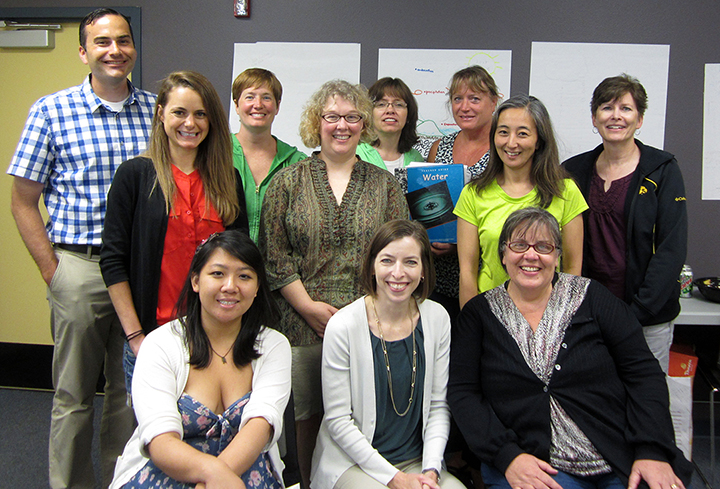
IMG_6179This month the MoHSES team had the wonderful opportunity to work with a fantastic group of 7 3rd-grade teachers who have been involved in the MoHSES project over the past two years.  The collaborative workshops were held at the Grant Wood Area Education Agency in Coralville, Iowa where we spent a few days talking and thinking about supporting elementary students’ use of models to make sense of the water cycle.  We are incredibly lucky to be working with such a knowledgeable and engaged group of teachers as partners and co-designers in this exciting project.

Invited Talk at the International Conference on New Teacher Competencies

imageEarly this month I had the opportunity to travel to Enschede in the Netherlands to give an invited talk at the International Conference on New Teacher Competencies.  The conference was held at the University of Twente and was sponsored by DoCenter, Center for Knowledge Creation on Teacher Development and Curriculum Design, and SLO (National Institute for Curriculum Development in The Netherlands).  Through my talk, entitled ‘Supporting teachers use of curriculum materials for science: Empirically-grounded perspectives on teachers’ curriculum design competencies’, I was able to share conceptual foundations and research findings from our work with elementary teachers to use instructional materials for science in the PIESC3, RAES, and MoHSES projects.   It was a great opportunity to learn from others similarly interested in instructional design, teacher design teams, and supporting teachers to use curriculum materials effectively.  Thank you to Jules Pieters, Joke Voogt, Adam Handelzalts, Nienke Nieveen, Maaike Heitink, and Sandra Schele for being wonderful hosts and making the trip both productive and enjoyable.

2014 NARST Early Career Research Award

NARST_2014_smallThis year I was selected to receive the 2014 Early Career Research Award, awarded annually by the National Association for Research in Science Teaching (NARST) at its annual meeting, held this year from March 30-April 2 in Pittsburgh.  It’s incredibly rewarding to be recognized by my colleagues and peers for the research I’ve conducted over the past 5 years.  I was lucky to be able to share the moment with my doctoral advisor, Betsy Davis, Associate Professor of Science Education in the School of Education at the University of Michigan, and current and former graduate students Mandy Biggers, Assistant Professor of Science Education in the College of Education at Penn State, Laura Zangori, Jaime Sabel and Tina Vo, all of whom have helped make this accomplishment possible.  See related stories here and here.


Science Literacy ‘Big Ideas’ Seminar at UNL

UNL’s 2014 ‘Big Ideas’ Seminar series kicks off on February 19 with a 1-day event showcasing science literacy.  Breakout sessions beginning at 1:00 will highlight systems thinking around food, energy, and water systems, informal science education, early childhood education, the role of rural family-school partnerships. Dr. Rodger Bybee will give a presentation at 3:00 entitled “Building Science Literacy through Engagement in Community and Environmental Stewardship”. Seminar co-sponsors include IANR; UNL Extension; Department of Child, Youth and Family Studies; College of Education and Human Sciences; and Nebraska Center for Research on Children, Youth, Families and Schools. It will be a fantastic opportunity to engage with state partners and learn more about science literacy.

UNL IANR science literacy press

ianr_nHere is a sampling of media coverage of the large cluster hire undertaken by UNL’s Institute for Agriculture and Natural Resources, including the personnel associated with the Science Literacy Initiative.

From NebraskaSCIENCE – New science education hires at UNL

From IANR News – New Science Literacy Initiative Faculty On Board at UNL

From the Robert B. Daugherty Water for Food Institute – UNL’s Institute of Agriculture and Natural Resources announces new positions

From the Omaha World Herald – UNL to add 36 ag-related professors by 2014

From IANR (video via YouTube) – IANR New Faculty Positions

Dave Pierson successfully defends masters thesis

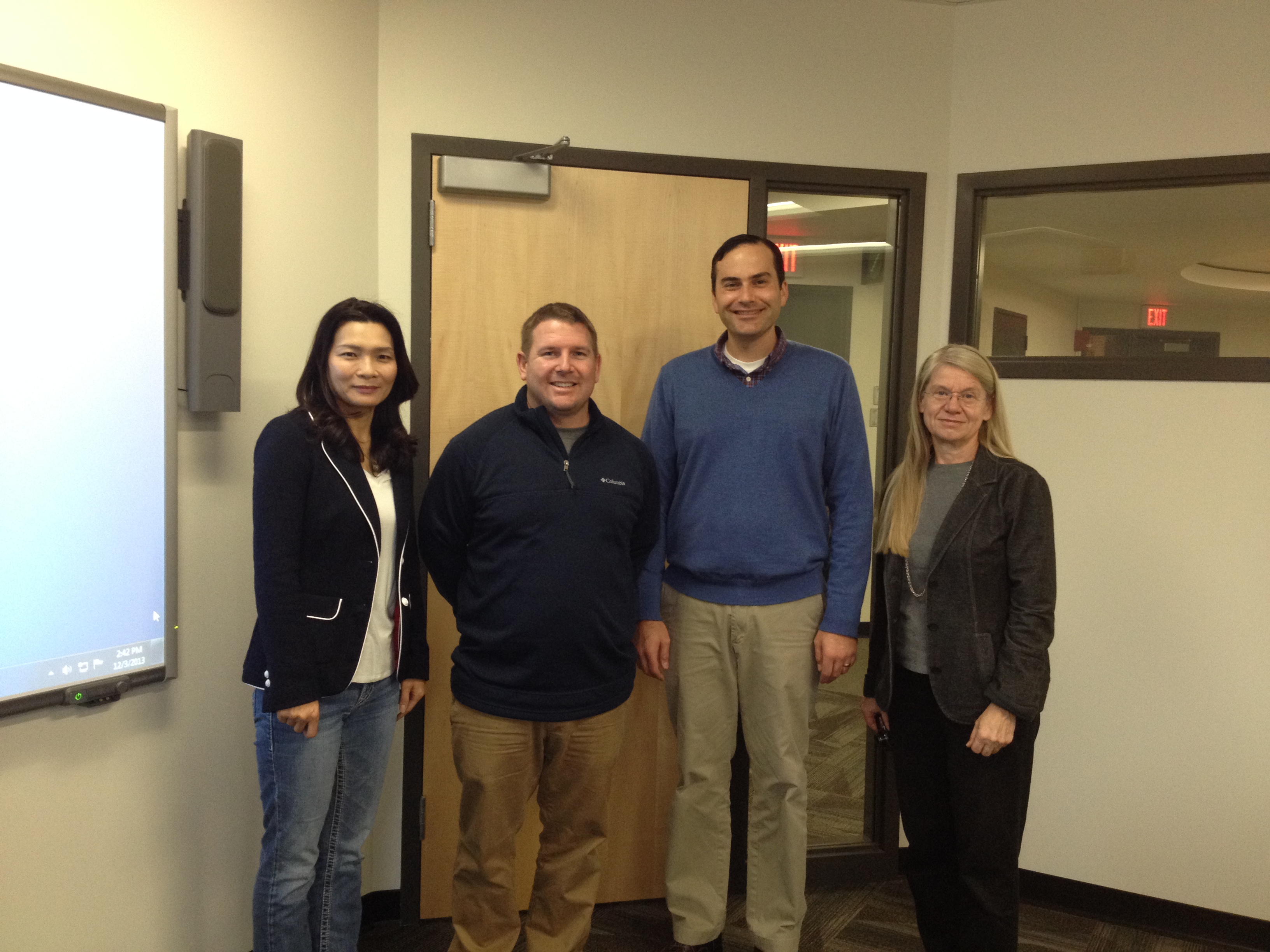
IMG_1075Congratulations to Dave Pierson for successfully defending his masters thesis entitled Elementary teachers’ assessment actions and elementary science education: Formative assessment enactment in elementary science.  Dave used RAES-Iowa project data to conduct a comparative case study investigating elementary teachers’ reasoning about students’ ideas and classroom formative assessment practices.  His committee members were myself, Soonhye Park, Associate Professor of Science Education in the University of Iowa College of Education, and Gabrielle Ludwig, Professor in the UI Department of Occupational and Environmental Health.  Dave, great work on this substantial accomplishment!